Architectural Debt: The Hidden Cost of Rapid Systems Migration
Cloud migration is often a sophisticated illusion. Learn why relocation isn't transformation and how ignored architectural debt drains your operational margins in the cloud.

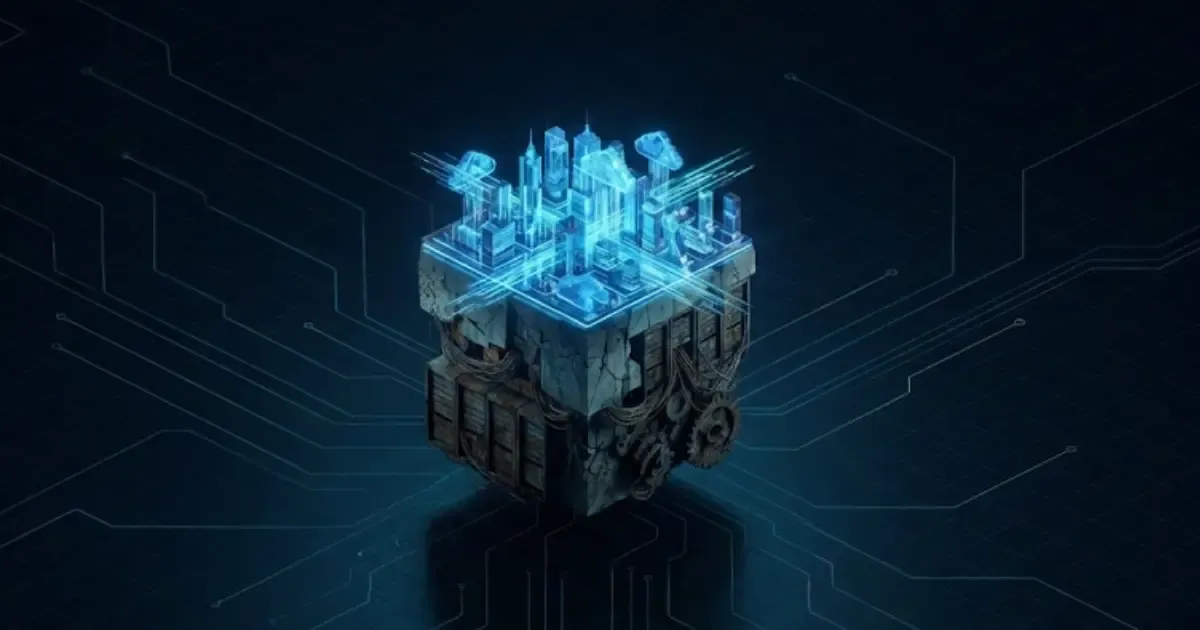
In the frantic theater of digital transformation, "speed-at-all-costs" has become the mantra of the ill-advised. Organizations rush to evacuate their data centers, sprinting toward the cloud under the naïve assumption that agility is a byproduct of location. It isn't. Many are falling into a sophisticated trap: Legacy system migration is not a magic eraser for structural incompetence; it is often merely a change of scenery for deep-seated flaws.
If your migration lacks a rigorous architectural strategy, you aren't transforming—you are simply performing a "debt transfer." You are relocating rigid, inefficient architectures to a premium environment where their flaws become exponentially more expensive. This is the cold reality of Architectural Debt.
1. Introduction: Moving the Problem vs. Solving the Crisis
What exactly is a legacy system? To the uninitiated, it’s "old software." To the expert, it is any platform that creates friction against the strategic pulse of the business. It is a system that has lost its pedigree, becoming a liability that stifles innovation.
When leadership demands a rapid system migration, teams often retreat to the safety of a "Lift and Shift" approach. While this might satisfy an arbitrary deadline, it ignores the rot beneath the surface. In the cloud, these structural failures don't just slow you down; they manifest as "Cloud Waste"—a monthly invoice that punishes you for every inefficient line of code and every poorly coupled service.
2. Architectural Debt vs. Technical Debt: A Critical Distinction
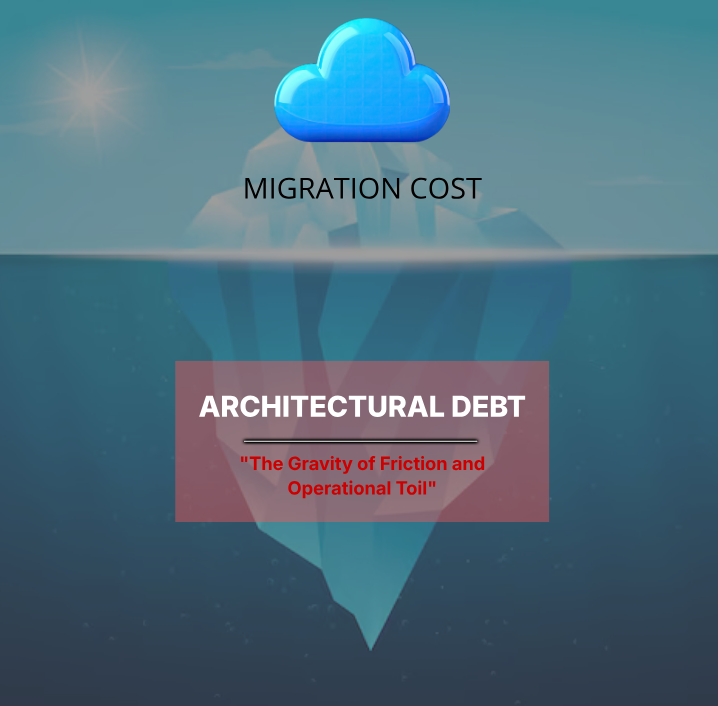
To manage a migration with any degree of sophistication, one must distinguish between minor nuisances and strategic failures. While developers fixate on technical debt—unclean code or neglected unit tests—Architectural Debt is a systemic disease that compromises the entire organization.
- Technical Debt is the equivalent of clutter in a room. It is irritating, yes, but ultimately manageable with a bit of discipline.
- Architectural Debt is a fundamental flaw in the foundation of the building. No amount of aesthetic polishing will prevent the structure from collapsing under the weight of modern scale.
When measuring technical debt, the average organization focuses on the visible ripples. They overlook the deep-water currents: monolithic dependencies and rigid data schemas that become significantly more costly to dismantle once the migration "completion" has been celebrated.
3. Is Replacing a Legacy System Worth It?
This is the perennial "million-dollar question" in IT cost management. The answer is a calculated yes, but only if your modernization strategy actually reduces the "interest rate" on your structural liabilities.
Replacing a system is an investment in future velocity. If you migrate a monolith to AWS or Azure without the courage to refactor, you are simply paying a premium "cloud tax" for the privilege of keeping your problems alive.
The True Cost of Inertia
- Maintenance Paralysis: When 80% of your IT budget is consumed by "keeping the lights on," you aren't an innovator; you're a museum curator.
- Strategic Friction: If a simple feature takes three months to deploy, your architecture is no longer an asset—it’s a leash.
4. The 6 R's of Migration: Choosing Your Interest Rate
A true leader doesn't just "move" systems; they choose their level of future friction. Use the 6 R's of Migration as a menu for your long-term operational health:
| Strategy | Velocity | Initial Investment | Architectural Debt | Strategic Outcome |
|---|---|---|---|---|
| Rehost | Exceptional | Minimal | Escalates (Debt Transfer) |
For those who value deadlines over dividends. |
| Replatform | High | Moderate | Neutral (Minor Refinement) |
A tactical move, not a strategic one. |
| Refactor | Balanced | Significant | Reduces (Optimization) |
The mark of a forward-thinking architect. |
| Re-architect | Measured | Premium | Liquidates (Zero Debt) |
Complete structural rebirth for core assets. |
| Retire | Immediate | Low | Eliminates (Debt Removal) |
Addition by subtraction. |
| Retain | Zero | Zero | Deferred (Latent Risk) |
Acceptable only for systems with no future. |
Modernization Strategy
Velocity vs. Time
Path A: Rehost
"Lift & Shift" offers a quick initial win but is unsustainable. By failing to pay down technical debt, productivity crashes and stalls in a high-friction plateau.
Path B: Refactor
Requires upfront investment (slow start). Once the Cloud Native foundation is set, velocity becomes exponential and superior in the long run.
5. The Financial Gravity of Architectural Debt
Sophisticated IT cost management requires looking past the initial cloud invoice. The hidden cost of architectural debt is "Friction." In organizations burdened by debt, engineering talent is wasted—nearly 40% of their intellectual capital is spent fighting "accidental complexity" rather than building the future.
To maintain a position of authority, monitor these three pillars of waste:
- Direct Cloud Waste: Over-provisioned instances trying to compensate for inefficient scaling.
- Opportunity Decay: While your team struggles with a fragile architecture, your competitors are capturing the market.
- Operational Toil: The soul-crushing manual labor required to keep a poorly architected cloud system from collapsing.
6. Conclusion: A Framework for Strategic Modernization
Do not allow your legacy system migration to become a glorified balance transfer of technical liability. To achieve a state of true agility, follow this elite framework:
- Sovereign Debt Audit: Identify the most expensive friction points before a single byte is moved.
- The Priority Filter: Do not refactor everything. Use the 6 R's to invest where the ROI is undeniable.
- Incremental Liquidation: Pay down architectural debt in strategic, manageable cycles.
- Governance as Excellence: Establish standards that make debt generation an impossibility, not a choice.
- Cost Observability: Treat cloud spending as a diagnostic tool to identify architectural rot in real-time.
Final Thought: The objective of legacy system migration isn't to change the address of your code—it's to change the trajectory of your enterprise. If you aren't reducing your debt, you aren't migrating; you are simply rearranging the deck chairs on the Titanic.