
Zachman Framework vs. TOGAF: Which Enterprise Architecture Framework Should You Choose?
Explore the key differences between the Zachman Framework vs TOGAF. Learn their distinct approaches, pros, cons, and how to choose the right Enterprise Architecture framework for your organization's IT strategy.


In the world of Enterprise Architecture (EA), the debate of Zachman Framework vs TOGAF consistently dominates the conversation
While both aim to align IT strategy with business goals, they approach the challenge from entirely different angles. One is a structured process, while the other is a classification system. If you are an IT leader or an architect trying to decide which one to implement, this guide will break down the fundamental differences, advantages, and use cases for each.
What is the Zachman Framework?
Created by John Zachman in the 1980s, the Zachman Framework is often described as a taxonomy or a schema. It is not a methodology; rather, it provides a logical structure for classifying and organizing the descriptive representations of an enterprise.
The 6x6 Matrix
The framework is a two-dimensional classification scheme based on six interrogatives (What, How, Where, Who, When, Why) intersecting with six distinct perspectives:
- Planner (Executive perspective)
- Owner (Business Management perspective)
- Designer (Architect perspective)
- Builder (Engineer perspective)
- Subcontractor (Technician perspective)
- User (Functional perspective)
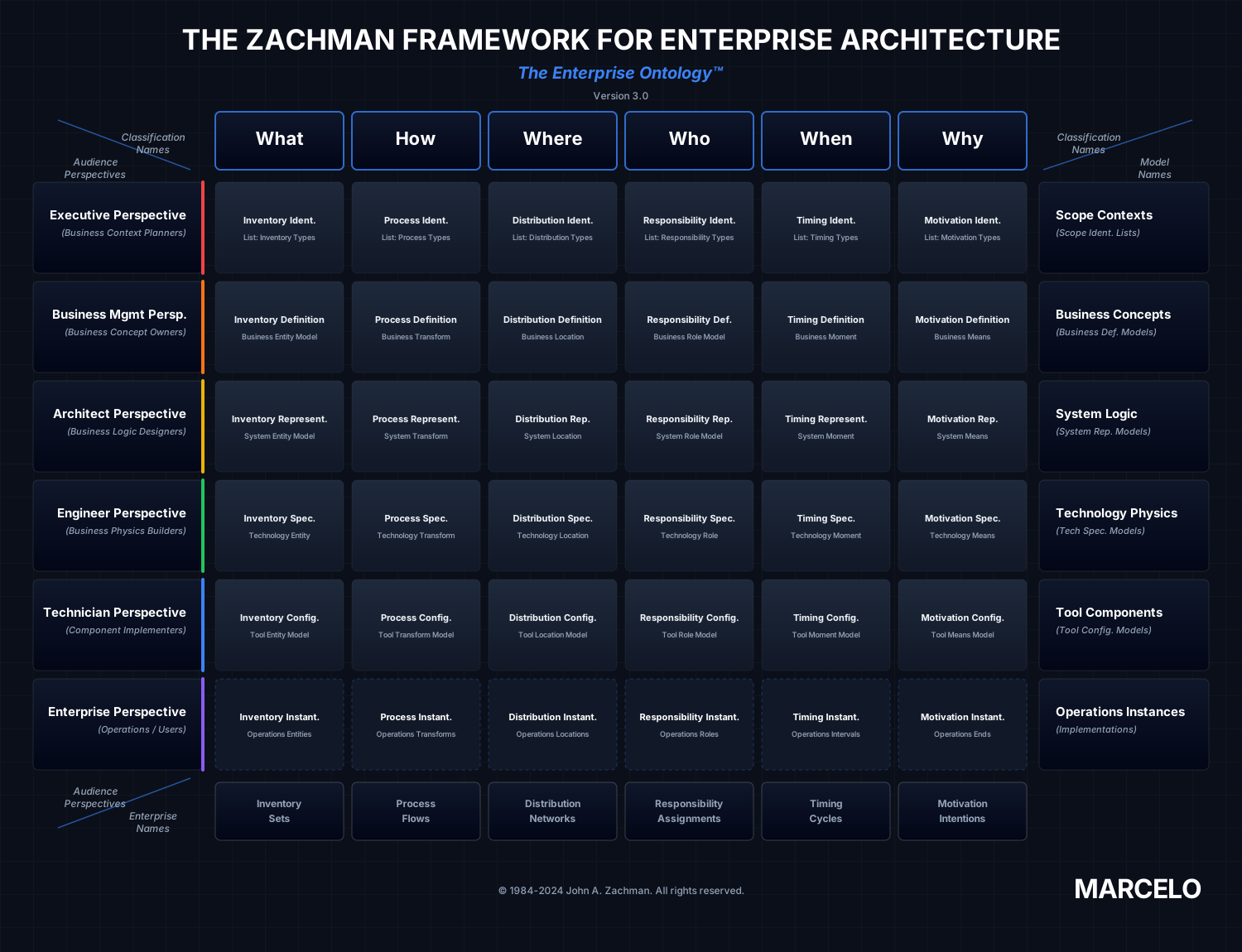
Key Strength: It ensures that every stakeholder's view is accounted for and that no "architectural gaps" exist in the documentation.
What is TOGAF?
TOGAF, developed by The Open Group, is the most widely used enterprise architecture framework and methodology. Unlike Zachman, TOGAF provides a step-by-step process for designing, planning, implementing, and governing an enterprise information architecture.
The Architecture Development Method (ADM)
The centerpiece of TOGAF is the ADM, a circular process consisting of several phases (from Preliminary to Requirements Management) that guides architects through a continuous cycle of improvement.
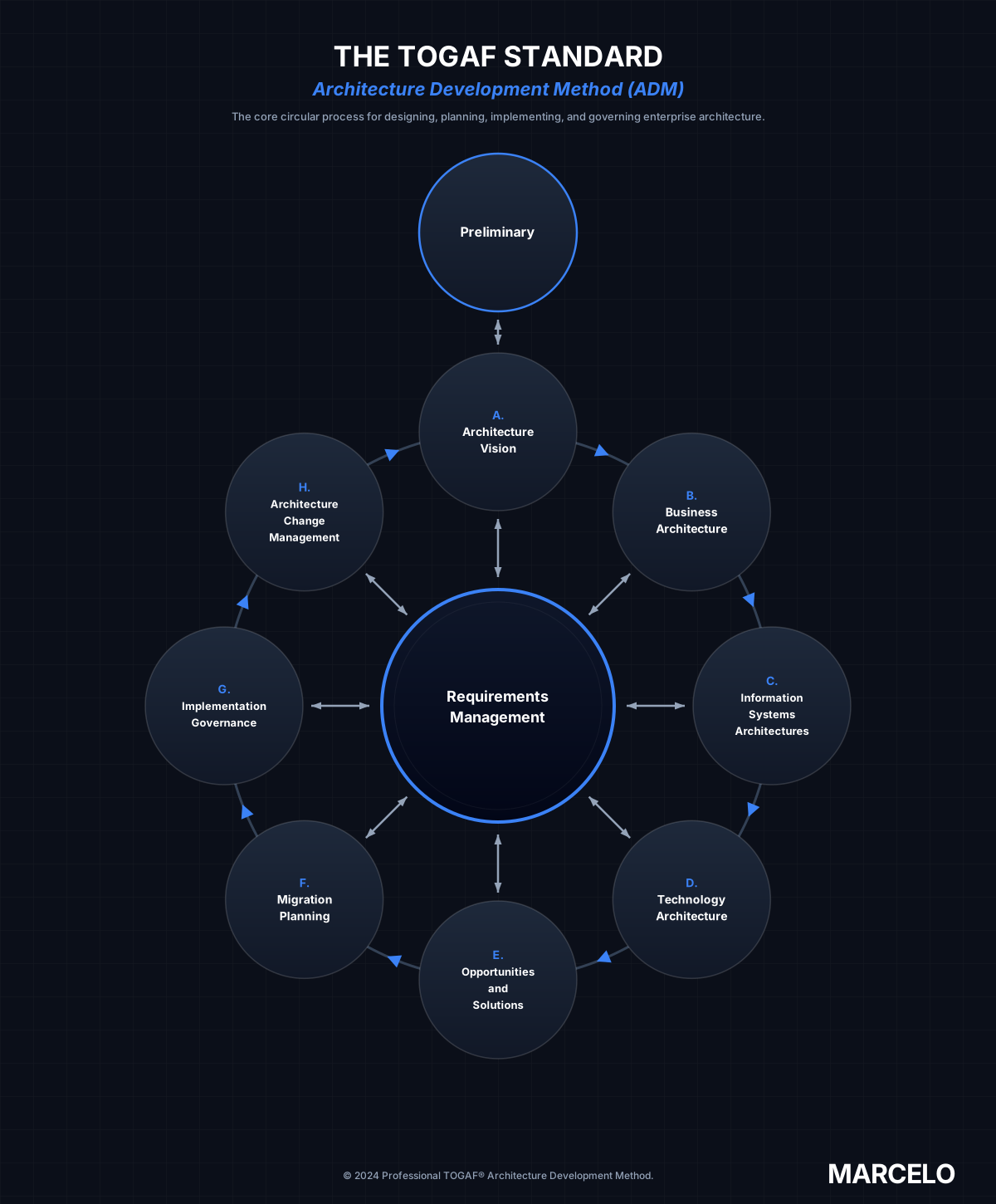
Key Strength: It is highly flexible and provides a detailed "how-to" guide for moving from a baseline state to a target state.
Key Differences: Zachman vs. TOGAF
| Feature | Zachman Framework | TOGAF |
|---|---|---|
| Nature | Taxonomy / Ontology | Process / Methodology |
| Focus | "What is it?" (Structure & Classification) | "How do we do it?" (Process & Lifecycle) |
| Goal | Completeness of description | Transformation and implementation |
| Structure | A static 6x6 matrix | A dynamic, iterative cycle (ADM) |
| Flexibility | Rigid in structure, but agnostic to tools | Highly adaptable to organizational needs |
| Scope | Enterprise-wide structural integrity | Domain-specific (Business, Data, Apps, Tech) |
| Origin | Derived from classical engineering/construction | Derived from NIST TAFIM and collaborative industry efforts |
| Artifacts | Focused on the "Model" and its perspectives | Focused on "Deliverables" and "Work Products" |
Pros and Cons
Zachman Framework
Pros:
- Comprehensive Mapping: Provides a complete and holistic "map" of the entire enterprise landscape.
- Stakeholder Inclusivity: Ensures all stakeholder perspectives, from executives to technicians, are fully considered.
- Gap Analysis: Helps identify missing information and structural inconsistencies in existing systems.
- Language Independence: It is agnostic to specific modeling languages or tools, allowing the use of UML, BPMN, or others.
- Conflict Identification: Helps pinpoint where different stakeholders have conflicting views of the same business asset.
Cons:
- Methodological Gap: It focuses on classification but doesn't tell you how to actually build or migrate the architecture.
- Bureaucratic Risk: Can become overly complex and bureaucratic if every single cell in the matrix is pursued without priority.
- Learning Curve: Requires deep conceptual understanding of the "interrogatives" to apply accurately without confusion.
- Lack of Implementation Guidance: Offers no specific roadmap or lifecycle for moving from a current state to a future state.
TOGAF
Pros:
- Industry Standardization: Recognized as the global industry standard with a massive supportive community and talent pool.
- Value Driven: Strongly aligns IT architecture with measurable business value and return on investment (ROI).
- Structured Governance: Provides clear, documented phases for development, implementation, and long-term governance.
- Scalability: The framework can be tailored for small targeted projects or massive, global-scale digital transformations.
- Resource Ecosystem: Access to a vast library of templates, professional certifications, and compatible software tools.
Cons:
- Architectural Complexity: Often criticized for being too complex, "heavy," and difficult for smaller teams to navigate.
- Process-Heavy Focus: Focuses intensely on the process lifecycle, sometimes at the expense of clear documentation standards.
- Initial Setup Effort: Requires significant "tailoring" and customization before it becomes practical for a specific organization's culture.
- Time-to-Value: Completing a full ADM cycle can be time-consuming, which may delay visible results for impatient stakeholders.
Can They Be Used Together?
The short answer is yes. In fact, many successful organizations use them as complementary tools.
Think of TOGAF as the engine (the process that moves you forward) and Zachman as the dashboard. To see how this works in practice at the operational level, check out our Business Process Architecture Framework Guide to align your operational reality with this strategic intent.
Which One Is Right for You?
Choosing between Zachman and TOGAF depends on your organization's immediate needs:
- Choose Zachman if: You need to organize a massive amount of existing information and ensure that different departments are communicating using the same "map."
- Choose TOGAF if: You are looking for a proven, step-by-step methodology to transform your business and align your IT infrastructure with your strategic goals.
Conclusion
Neither framework is "better" than the other; they simply serve different purposes. While TOGAF provides the roadmap for change, Zachman provides the vocabulary and structure to understand the enterprise. Most modern architects find that a hybrid approach—leveraging the process of TOGAF with the classification rigor of Zachman—yields the best results.
Looking to get certified? Both frameworks offer professional certifications that can significantly boost an architect's career path in Enterprise Architecture.