
Best Practices in Digital Governance Frameworks for the Modern Era
Explore the core pillars of accountability, data stewardship, and standardization to transform your digital presence into a competitive


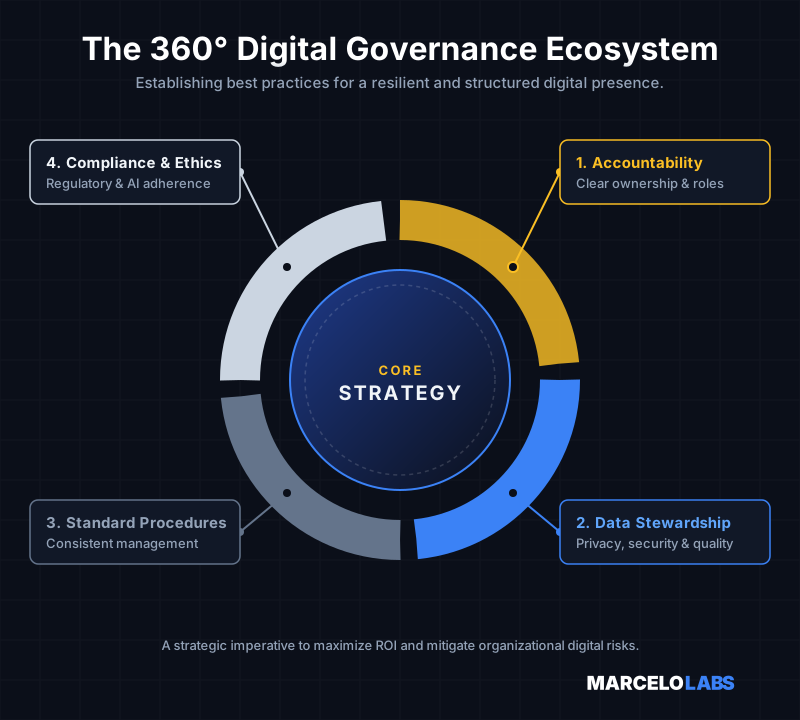
As enterprises navigate the complexities of rapid technological evolution, the need for a structured, disciplined approach to managing digital assets has never been more critical. Establishing best practices in digital governance frameworks is not merely a compliance exercise—it is a strategic imperative that separates industry leaders from those left behind in the wake of disruption.
Digital governance provides the essential guardrails for an organization’s digital presence. However, true maturity requires anchoring these efforts in recognized global standards. By synthesizing principles from COBIT 2019, ISO/IEC 38500, and TOGAF, organizations can transform a vague digital strategy into a rigorous, audit-ready operating model.
Why Are Best Practices in Digital Governance Frameworks Essential for Global Enterprises?
The primary challenge for modern organizations is the "decentralization of digital." When departments—from marketing to HR—launch independent digital initiatives without a unifying structure, the result is often a fragmented brand identity, security vulnerabilities, and inefficient resource allocation.
Adopting best practices in digital governance allows leadership to regain visibility and control. A well-constructed framework serves as a "single source of truth," defining who has the authority to make decisions, who is responsible for execution, and what standards must be met across the board. This is particularly vital for organizations operating across multiple geographies, where local regulations like GDPR in Europe or CCPA in North America necessitate a nuanced yet unified approach to digital operations.
How Can Organizations Define Ownership and Accountability Within Their Digital Structure?
One of the most frequent points of failure in digital strategy is the lack of clear ownership. Without a defined hierarchy, accountability vanishes, and critical tasks—such as security updates or content audits—fall through the cracks.
The most effective frameworks begin with the establishment of a Digital Governance Committee. This body should be cross-functional, including representatives from IT, Legal, Marketing, and Operations. The goal is to move away from a "siloed" mentality and toward a collaborative model where digital assets are viewed as shared corporate resources.
Key Accountability Best Practices:
- The RACI Model: Implement a Responsibility Assignment Matrix (Responsible, Accountable, Consulted, Informed) for every major digital process.
- Executive Sponsorship: Ensure the framework is championed at the Board level. Digital governance is a top-down initiative; without executive buy-in, policies are unlikely to be enforced.
- Role-Based Access Control (RBAC): Define specific permissions for digital tools to prevent unauthorized changes and protect sensitive data.
What Are the Core Pillars of Data Stewardship and Security in Modern Frameworks?
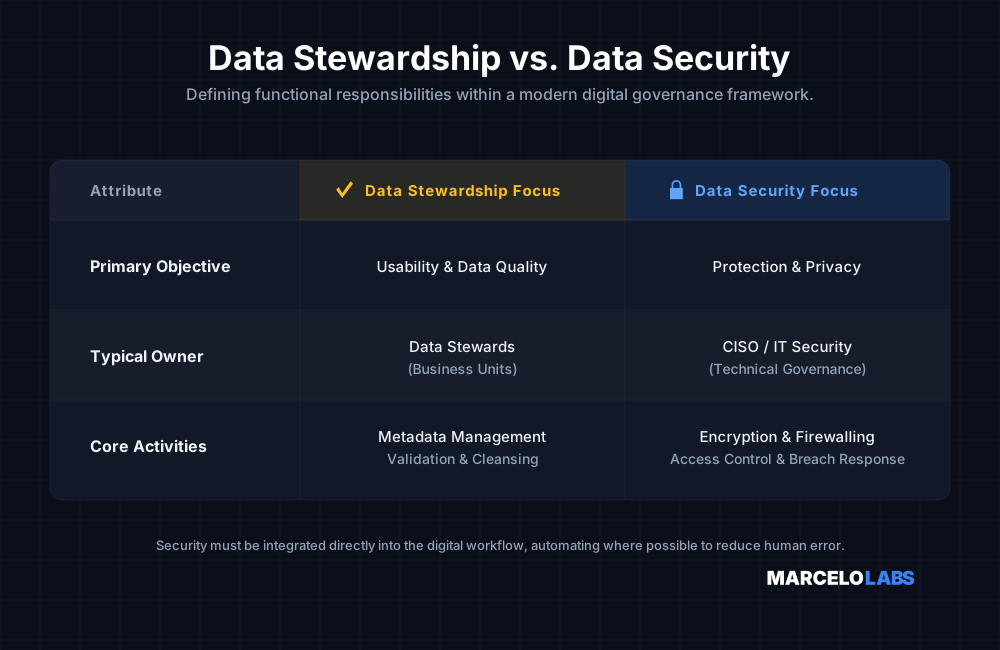
In an era where data is often described as "the new oil," the governance of that data is the refinery that makes it valuable—and safe. Data stewardship is the technical engine of any governance framework, and it must be distinguished from data security.
While security focuses on protection and privacy—utilizing protocols like enterprise key management—stewardship focuses on usability and quality. Effective stewardship requires a rigorous focus on data quality, ensuring that the information driving business decisions is accurate and complete, as outlined in the DAMA-DMBOK (Data Management Body of Knowledge).
How Does Standardizing Procedures Enhance Operational Efficiency Across Different Regions?
To achieve true operational excellence, digital governance must be integrated into the organization's Enterprise Architecture (EA). Using a framework like TOGAF (The Open Group Architecture Framework), we can map governance requirements across the various layers of the enterprise:
- Strategic Layer: Aligning digital investments with the long-term business vision.
- Business Layer: Defining the processes and organizational structures that execute the digital strategy.
- Data Layer: Implementing stewardship and quality controls to ensure data integrity.
- Technology Layer: Managing the underlying infrastructure, from cloud environments to SOC 2 compliance audits.
This multi-layered approach ensures that governance is not an isolated silo but a thread that runs through every technological decision the company makes.
What is the Definitive Best Practices in Digital Governance Frameworks Checklist?
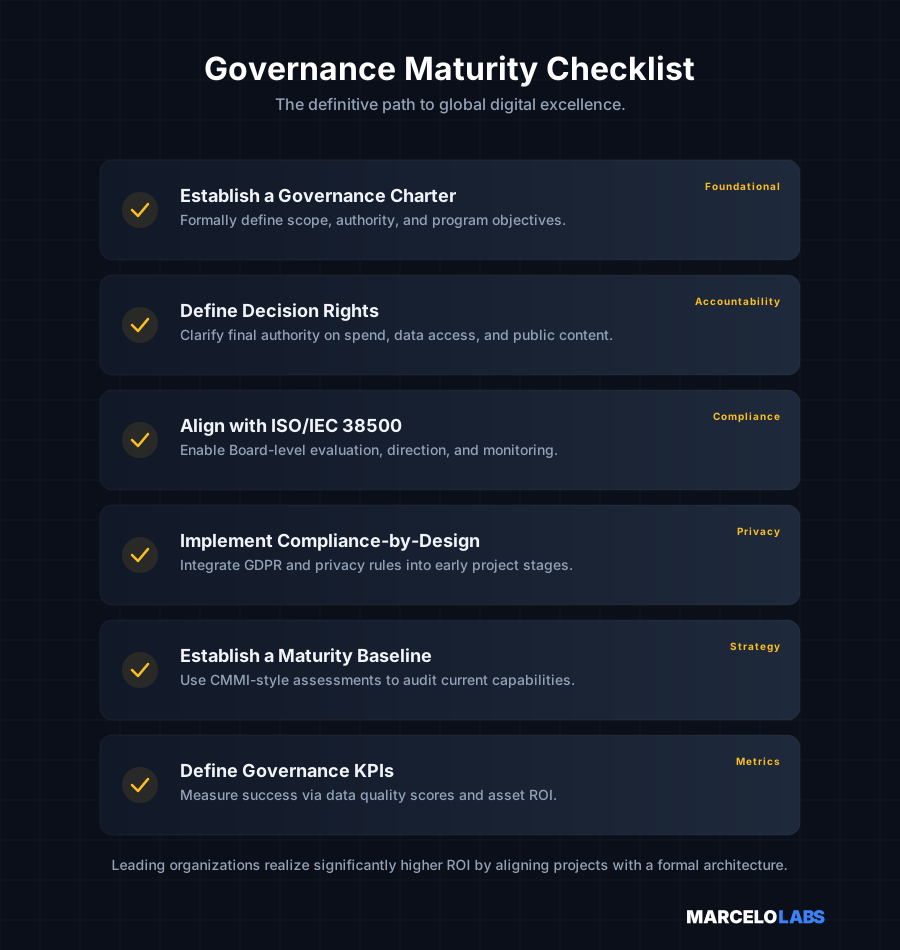
For organizations seeking a direct path to implementation, the following checklist represents the industry's highest standards for governance maturity:
- Establish a Governance Charter: A formal document defining the scope, authority, and objectives of the digital governance program.
- Define Decision Rights: Explicitly state who has the final "say" on technology spend, data access, and public-facing content.
- Align with ISO/IEC 38500: Ensure the Board is evaluating, directing, and monitoring digital performance.
- Implement Compliance-by-Design: Integrate legal requirements—such as GDPR Article 25 (Privacy by Design)—into the earliest stages of project development.
- Establish a Maturity Baseline: Use a CMMI-style assessment to determine current capabilities before launching new initiatives.
- Define Governance KPIs: Measure the success of the framework using metrics like data quality scores, compliance audit results, and ROI on digital assets.
How Can Organizations Cultivate a Culture of Digital Excellence and Change Management?
Perhaps the most overlooked element of best practices in digital governance frameworks is the human factor. A framework is only as good as the people who use it. If the workforce perceives governance as a bureaucratic hurdle, they will find ways to bypass it.
Change management is therefore crucial. Organizations must invest in education and training to foster a "digital-first" mindset. Instead of framing governance as "restriction," it should be presented as "empowerment." When employees understand that these frameworks protect them from liability and streamline their workflows, adoption rates soar.
Strategies for Cultural Alignment:
- Continuous Training: Regularly update teams on new digital risks and updated procedures.
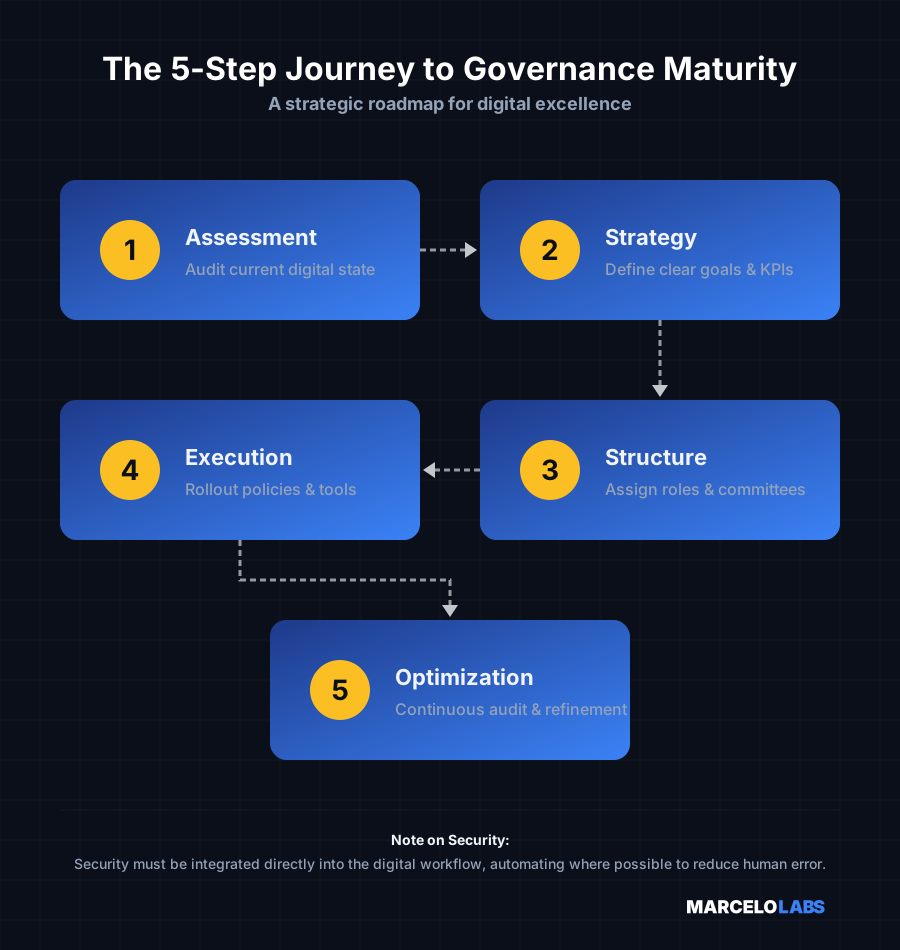
- Maturity Assessments: Periodically measure the organization's digital maturity to track progress and celebrate milestones.
- Feedback Loops: Allow the "boots on the ground" to provide input on the framework, ensuring it remains practical and relevant to their daily tasks.
Conclusion: The Future of Digital Governance
As we look toward the horizon, the emergence of generative AI and decentralized web technologies will only increase the complexity of the digital environment. Organizations that have already established best practices in digital governance frameworks will be uniquely positioned to harness these new technologies safely and effectively.
By prioritizing strategic alignment, clear accountability, and a culture of continuous improvement, your organization can transform digital governance from a defensive necessity into a competitive advantage. In the digital age, excellence is not an accident—it is the result of a well-governed framework.
Is your organization ready to refine its digital approach? Start with a comprehensive audit of your current digital assets and begin building the foundation for a more secure, efficient, and profitable future.