Navigating Enterprise Agility: Composable Architecture vs Microservices
Discover the strategic differences between composable architecture and microservices to accelerate enterprise agility, reduce TCO, and future-proof your digital operations.

Composable Architecture vs Microservices: Which Should You Choose?
As enterprise leaders, you are not just looking to write better code; you are looking to build technology systems that act as catalysts for sustained business growth. For years, the standard answer to the rigid, legacy monolithic system has been to introduce modularity.
However, as organizations race to modernize their infrastructure, a highly nuanced but vital debate has emerged in both the boardroom and the server room: the choice between composable architecture vs microservices.
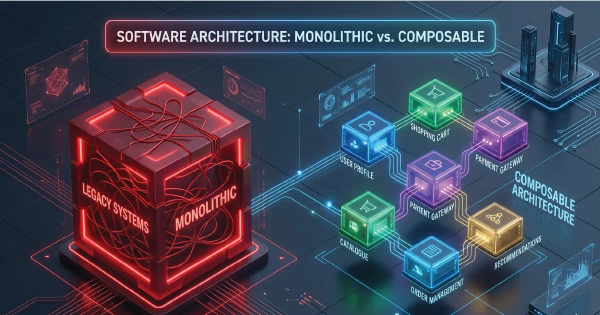
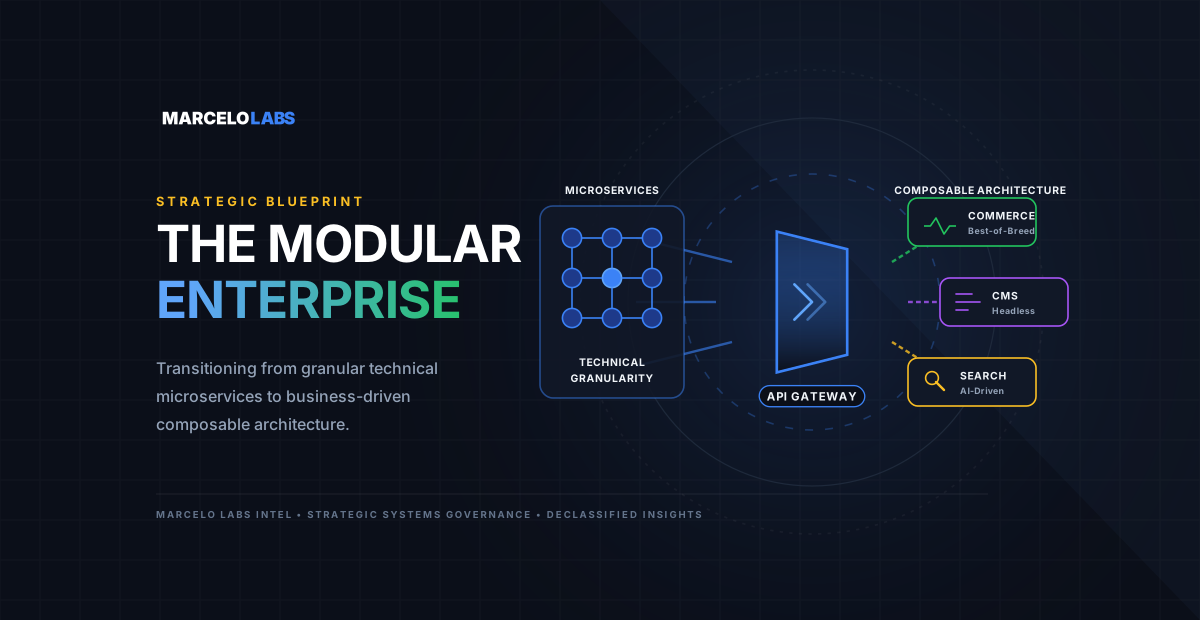
While both of these concepts champion modularity to break monolithic gridlock, they operate at entirely different levels of strategic impact. One is a highly granular, developer-focused method for building applications; the other is a holistic, C-suite-led strategy for assembling entire, revenue-generating technology ecosystems.
If you are currently evaluating how to modernize your stack, reduce Total Cost of Ownership (TCO), and prevent market share loss to agile competitors, understanding this distinction is paramount. Let’s explore these architectural philosophies, uncover the financial and operational implications of each, and discover how leveraging both can dramatically scale your business operations.
Composable Architecture vs Microservices: Core Differences Explained
To make a profitable, future-proof investment in your technology stack, we must first dissect the fundamental differences in the composable architecture vs microservices conversation. Treating these distinct approaches as interchangeable buzzwords inevitably leads to misaligned budgets, frustrated engineering teams, and stalled digital transformations.
The Microservices Approach: Technical Implementation
Microservices represent a structural software architectural style where a single, large application is broken down into small, independently deployable services. Think of them as the fine-grained, technical gears of your operational engine. Each microservice typically handles a highly specific task—such as authenticating users, querying databases, processing images, or managing server loads.
The Business Value for Decision-Makers:
- System Resilience and Risk Mitigation: Engineering teams can deploy updates or fix bugs in one microservice without risking a system-wide crash. If the payment microservice goes down, the product catalog remains online, protecting your overall customer experience.
- Engineering Efficiency: This approach accelerates Continuous Integration/Continuous Deployment (CI/CD) pipelines, allowing your developers to ship features faster and operate in autonomous pods rather than waiting on a monolithic release cycle.
The Composable Architecture Approach: Business Strategy
Composable architecture elevates modularity from the IT department to overall business strategy. It treats every part of your enterprise—including third-party SaaS tools, payment gateways, CRM systems, and backend infrastructure—as interchangeable "Lego bricks," known as Packaged Business Capabilities (PBCs). It is a broader mindset aimed at enterprise flexibility.
The Business Value for Decision-Makers:
- Ultimate Vendor Agility: Composable architecture actively prevents vendor lock-in. If a SaaS provider raises prices or lags in AI innovation, you can seamlessly swap them out for a competitor without requiring a systemic rewrite of your entire platform.
- Rapid Innovation and Time-to-Market: It empowers marketing and sales teams to deploy new digital experiences, test new markets, and integrate new channels in days rather than quarters, directly impacting the bottom line.
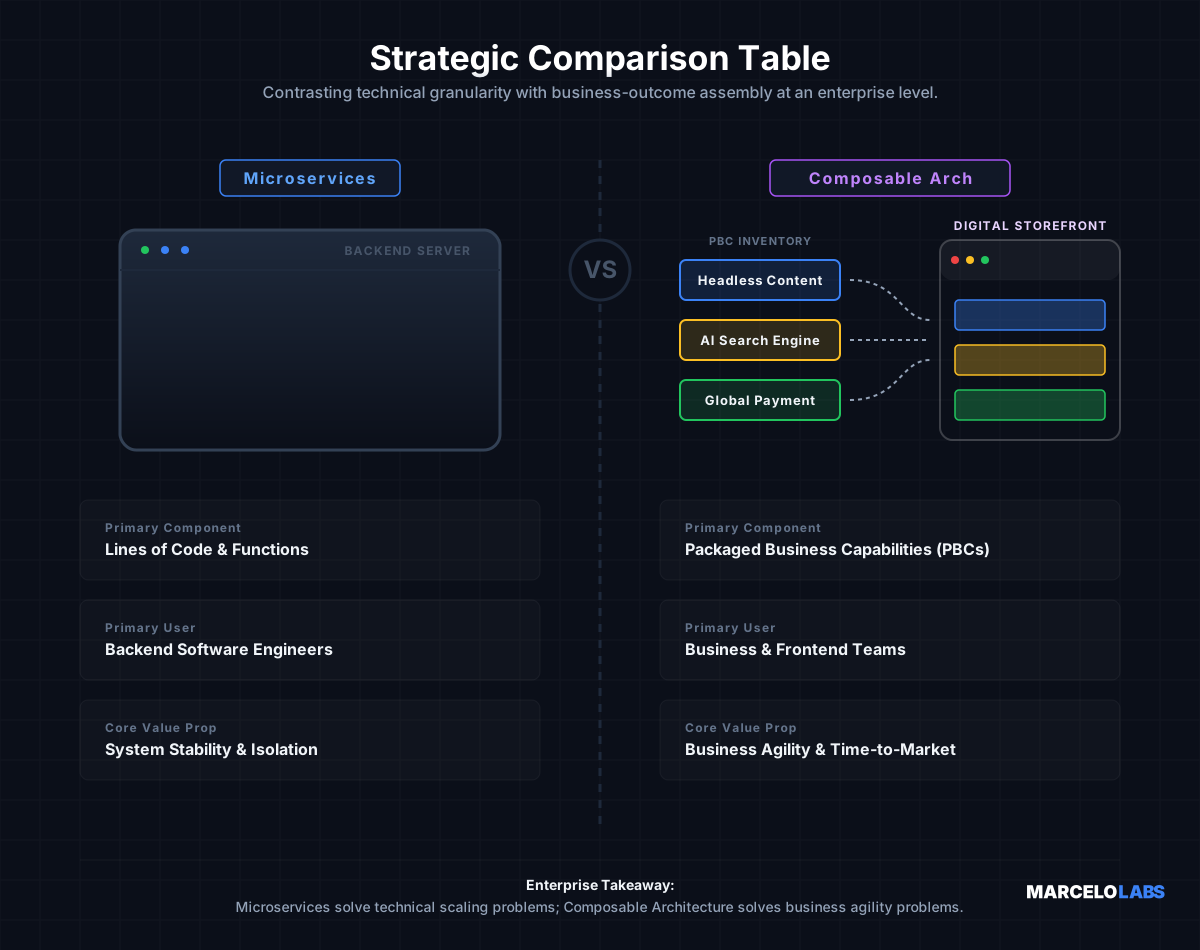
Strategic Comparison Table
To provide clarity on how these two approaches compare at an enterprise level, here is a consultative breakdown:
| Strategic Pillar | Traditional Microservices | Composable Architecture |
|---|---|---|
| Primary ROI Focus | IT infrastructure stability and application scaling. | Enterprise agility, speed-to-market, and revenue growth. |
| Investment Level | Fine-grained (e.g., modernizing internal databases or auth). | Coarse-grained (e.g., integrating best-of-breed CRM or CMS). |
| Team Alignment | Driven by internal engineering and DevOps leaders. | Driven by cross-functional teams (CTO, CMO, and Vendors). |
| Competitive Edge | Fault tolerance keeping internal systems online during peaks. | Ability to pivot digital business models faster than competitors. |
When to Use Composable Microservices in Your Enterprise
A common—and incredibly costly—misconception is that an enterprise must choose one path at the absolute expense of the other. In reality, the most profitable, resilient digital platforms engineered today rely heavily on the power of both. This critical synergy is found in the implementation of composable microservices.
When we discuss composable microservices, we are referring to microservices that are engineered explicitly to act as the foundational building blocks of a broader, enterprise-wide composable strategy.
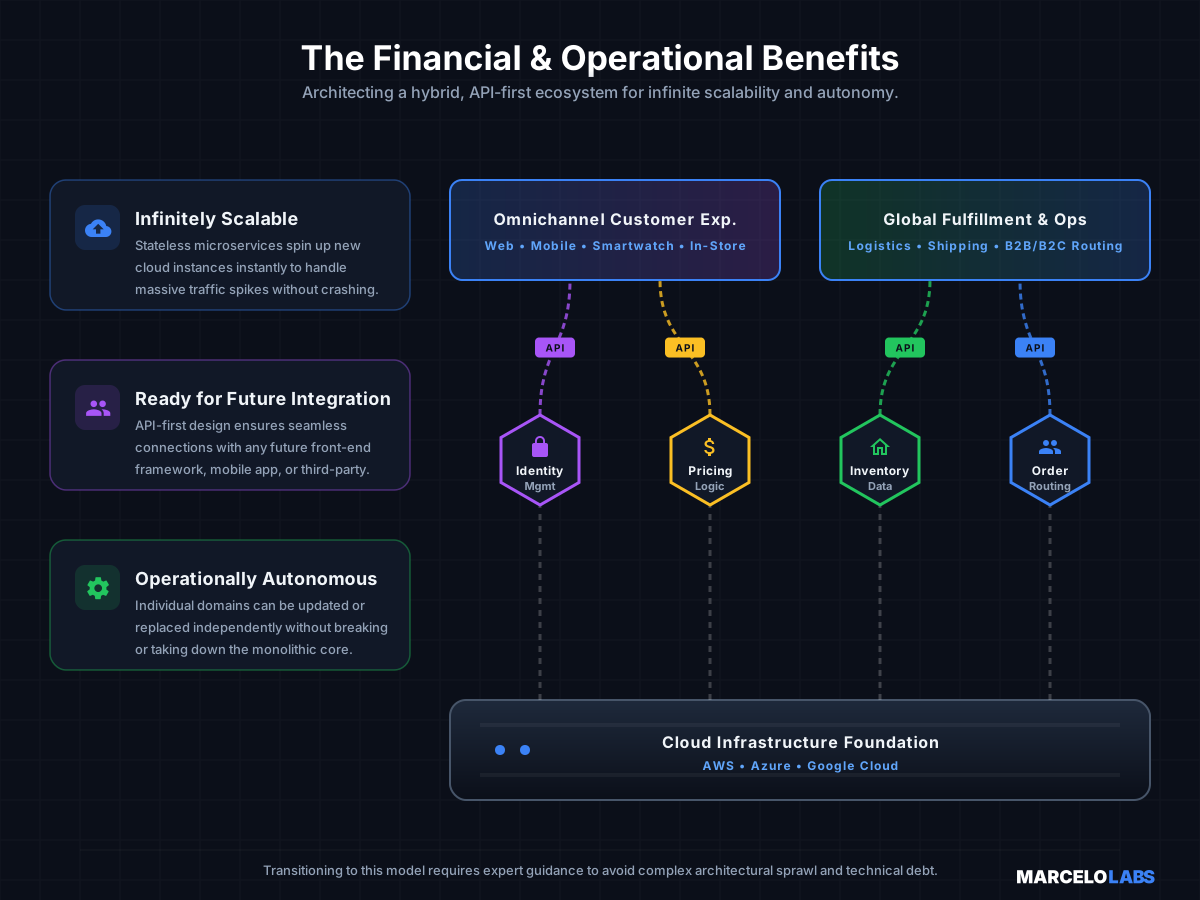
Traditional microservices might only serve the internal, hard-coded needs of one isolated application. Conversely, a composable microservice is built from the ground up with a "Domain-Bounded Context." This means it encapsulates a complete, distinct business capability and exposes it via a universal API (like REST or GraphQL). This architectural decision transforms pure technical code into a monetizable, reusable business asset.
The Financial and Operational Benefits
Investing in this hybrid, API-first approach ensures your digital architecture is:
- Infinitely Scalable (Stateless & Reactive): Composable microservices are designed to be stateless. They can seamlessly spin up new instances in the cloud to handle sudden, massive traffic spikes (such as a viral marketing campaign or a seasonal sale) without crashing, saving you from catastrophic lost revenue.
- Ready for Future Integration (API-First Design): Because they communicate via standard APIs, they connect seamlessly with any new front-end framework, mobile app, or third-party service you might acquire in the future.
- Operationally Autonomous: They can be updated, refined, or entirely replaced without requiring expensive, highly risky, months-long orchestration from a monolithic core.
Transitioning a legacy enterprise to this model requires expert guidance to avoid complex architectural sprawl and technical debt. For a granular look at the blueprints required to execute this shift successfully, explore our comprehensive consulting framework on composable software architecture.
The Benefits of Microservices in Composable Commerce
Nowhere is the shift toward modularity more directly tied to revenue generation than in retail, B2B sales, and e-commerce. Consumer expectations for personalized, frictionless shopping experiences are evolving relentlessly. Rigid, "all-in-one" e-commerce monoliths—legacy platforms that lock you into their specific suite of features—simply cannot keep pace with modern omni-channel demands.
This friction has driven the rapid, market-wide adoption of microservices in composable commerce.
Composable commerce allows visionary brands to curate highly customized, "best-of-breed" digital storefronts. Instead of settling for a monolithic platform that has an excellent checkout process but a mediocre search function, you invest only in the absolute best tools on the market for every single touchpoint.
The MACH Architecture Advantage
In the digital commerce sector, these microservices form the absolute bedrock of the MACH framework—the current gold standard for modern retail infrastructure:
- Microservices-based (Built for resilience and independence)
- API-first (Built for seamless data connectivity)
- Cloud-native SaaS (Built for infinite, on-demand scale)
- Headless (Built for omnichannel delivery across any device)
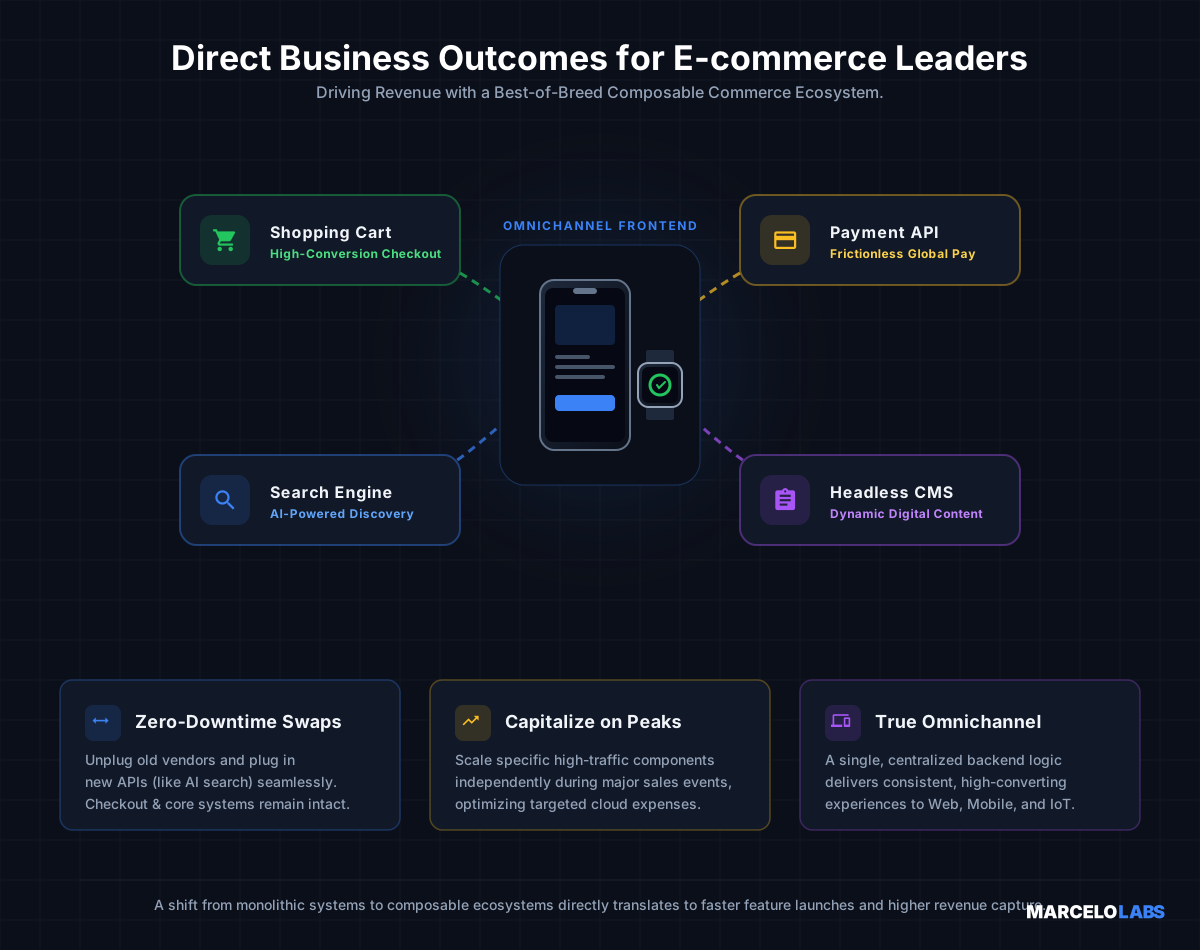
Direct Business Outcomes for E-commerce Leaders
Implementing a strategy built on these principles yields immediate, tangible ROI:
- Zero-Downtime Vendor Swapping: Imagine a new AI-driven search provider enters the market, promising a 15% bump in conversion rates. In a monolithic setup, integrating it is a risky, six-month IT project. In a composable ecosystem, you simply unplug the old search API and plug in the new one. Your checkout, inventory management, and CMS remain entirely unaffected.
- Capitalizing on Peak Events: You can scale your high-traffic customer storefront independently during Black Friday or major product drops, without paying for unnecessary backend server power to scale administrative tools simultaneously.
- True Omnichannel Presence: Because the frontend (the "head") is completely decoupled from the backend logic, your team can deliver identical, high-converting shopping experiences across web browsers, native mobile apps, smartwatches, and interactive in-store kiosks—all powered by a single centralized backend.
Next Steps: Transitioning Your Enterprise Architecture
The transition away from legacy monoliths is no longer an optional "nice-to-have" for enterprises looking to retain market dominance; it is a critical operational imperative. However, the exact path you choose must align intimately with your organizational maturity, your budget constraints, and your aggressive growth targets.
When to Invest in Microservices Transformation: If your immediate business bottleneck is internal engineering velocity—where complex, heavy codebases are causing high failure rates, technical debt, and painfully slow deployment cycles—a targeted microservices refactoring is your strategic starting point. It solves the technical friction holding your business back.
When to Scale to Full Composable Architecture: If your marketing, sales, and product teams are actively being held back by IT limitations—if you are losing customers because you simply cannot adopt new digital touchpoints or pivot your business model fast enough—it is time to implement a full composable architecture.
Accelerate Your Transformation with Expert Guidance
Attempting to architect a composable ecosystem internally without prior experience often leads to the creation of "distributed monoliths"—systems that are just as rigid as before, but now exponentially harder to manage. This results in wasted budgets, delayed product launches, and severe technical debt.
Partnering with seasoned architectural experts mitigates implementation risk and aggressively accelerates your time-to-value.
At Marcelo Labs, we specialize in helping enterprise decision-makers audit their current legacy systems, design high-ROI modular blueprints, and execute flawless migrations. We bridge the gap between technical execution and business strategy, ensuring your architecture directly drives revenue.
Stop letting rigid technology dictate your business strategy. Evaluate your stack, embrace composability, and engineer your business for the future.
Ready to future-proof your enterprise architecture and reduce your TCO? Contact our consulting team today for a comprehensive systems audit and discover how Marcelo Labs can accelerate your digital transformation.