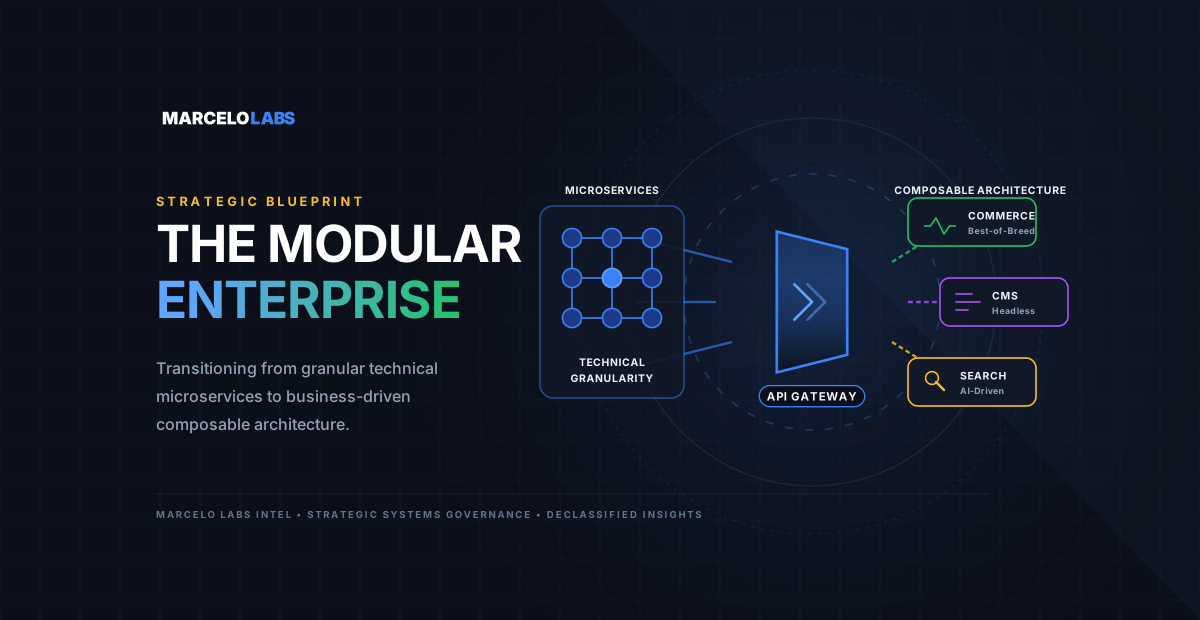
Composable Software Architecture: Principles, Examples, and Enterprise Implementation Guide
Discover how composable software architecture transforms rigid monolithic systems into agile, modular, and scalable digital ecosystems for modern businesses.


For decades, businesses relied on massive, rigid systems known as monoliths. They were powerful in their prime, but incredibly stubborn. Want to add a new payment option or tweak a product page? You often had to untangle a messy web of interconnected code, risking widespread outages and enduring agonizingly slow deployment cycles just to make a minor change.
Thankfully, we’re seeing a massive shift in how digital experiences are actually built. Instead of buying a bulky, all-in-one platform that dictates exactly how your business has to operate, modern development teams are embracing a more modular approach. By breaking down complex systems into smaller, independent, and interchangeable parts, businesses can finally create software that prioritizes speed and agility, adapting to them, rather than the other way around. Let's start by unpacking the foundational concepts of this approach.
The Jenga Analogy: Have you ever tried pulling a single block from the bottom of a massive Jenga tower? That anxiety-inducing moment when you hope the whole thing doesn't come crashing down—that’s exactly what updating traditional enterprise software used to feel like.
Short on time? Listen to the episode of this article on Spotify.
What is composable architecture?
At its most basic level, you can think of this architectural style as a box of highly advanced, digital building blocks. Instead of being locked into a predefined structure where every feature is tightly fused together, you are provided with distinct, independent components—often called Packaged Business Capabilities (PBCs).
Each of these components handles one specific task brilliantly. For example:
- Block A: Handles secure user authentication.
- Block B: Manages real-time inventory tracking.
- Block C: Powers a lightning-fast site search engine.
Because these blocks are independent, you can arrange, remove, or swap them out without breaking the rest of the system. It is a design philosophy that champions the seamless assembly of best-of-breed solutions to create a customized, highly functional digital ecosystem.
Watch the block-by-block breakdown of how Composable Architecture enables extreme business agility and technical resilience.
What is composable? The Core Concept
To truly grasp the architecture, we first need to isolate the core concept: what does it actually mean to be "composable" in a digital context?
In software, being composable refers to the intrinsic ability of a system's parts to be assembled, disassembled, and reassembled in various combinations to satisfy specific user requirements or market demands. It is the opposite of being hard-coded or static. A composable element is inherently:
- Independent: It functions on its own.
- Self-contained: It doesn't rely on the internal code of another system.
- Communicative: It perfectly communicates with other elements via standardized protocols.
It is this core trait that grants modern businesses the superpower of rapid iteration.
Composable architecture definition and meaning
When we synthesize these ideas, we arrive at a clear, formal understanding of the framework.
The Formal Definition: The precise composable architecture definition and meaning centers on an IT strategy that utilizes modular, independent, and interchangeable software components to build flexible business applications.
From a business meaning perspective, it represents the complete decoupling of your technology stack from vendor lock-in. It means that your enterprise is no longer beholden to the roadmap of a single software provider. Instead, you have the autonomy to select the absolute best tool for every specific job, integrating them into a cohesive whole that precisely matches your unique business logic and customer needs.
Overview of composable software architecture
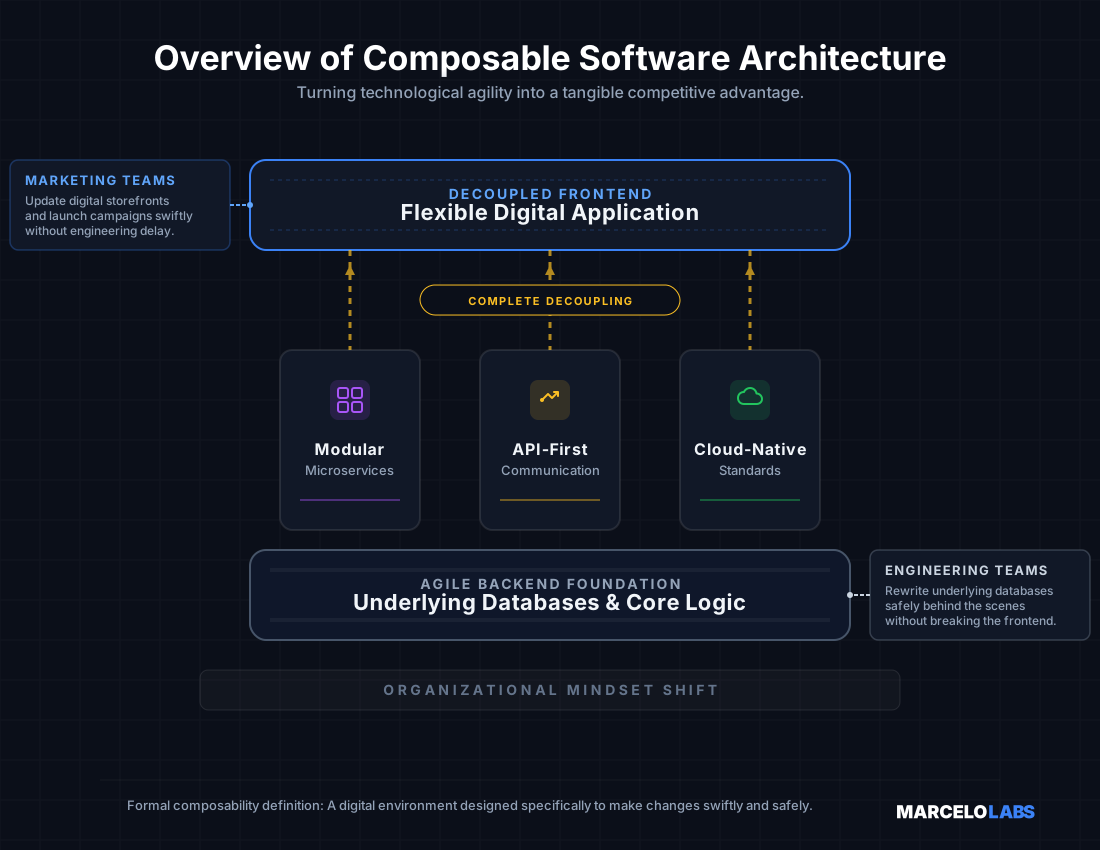
Looking at the broader picture, implementing this framework requires a shift not just in technology, but in organizational mindset. In practice, an overview of this architecture reveals a landscape heavily reliant on modern technological standards.
When we examine the formal composability definition, it becomes clear that the goal is to create a digital environment where changes can be made swiftly and safely. The architecture relies on a triad of core technologies:
| Technology Pillar | What It Does in the Ecosystem |
|---|---|
| APIs (Application Programming Interfaces) | The universal language that allows different software components to talk to each other securely. |
| Cloud-Native Deployment | Ensures services are hosted off-site (SaaS), dynamically scalable, and managed by specialized vendors. |
| Headless Infrastructure | Separates the frontend presentation (what users see) from the backend logic (where data lives). |
Because the frontend is completely decoupled from the backend, your marketing teams can update digital storefronts or launch new campaigns without needing engineers to rewrite underlying databases. It is an architecture designed specifically to turn technological agility into a tangible competitive advantage.
Key Principles of Composable Software Architecture
Transitioning to this modern framework isn't just about adopting new tools; it requires adherence to a specific set of foundational tenets. These principles are what ensure your digital building blocks actually fit together securely and perform harmoniously. Let's explore the core principles that make this architecture so resilient.
Modularity and Flexibility
The bedrock of this entire approach is modularity. In a traditional system, features are deeply intertwined. If you want to upgrade your payment processing gateway, you might accidentally disrupt your checkout cart.
In a modular setup, every business function is encapsulated into its own distinct module. This isolation breeds incredible flexibility:
- Rapid Swapping: If a better, faster search engine hits the market tomorrow, your development team can simply unplug the old search module and plug in the new one.
- Zero Disruption: The rest of your application remains completely untouched and perfectly stable.
This level of flexibility allows businesses to pivot their digital strategies in days or weeks, rather than months or years.
Interoperability of Components
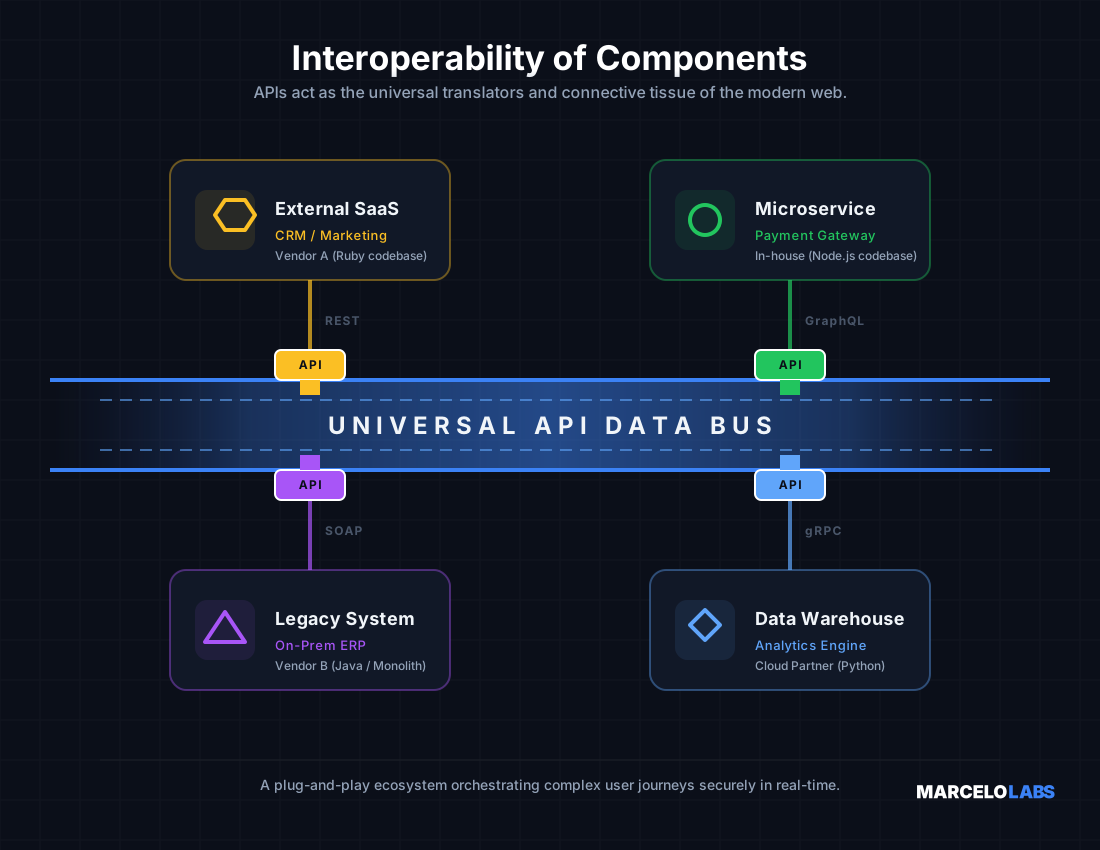
Modularity is only useful if these independent pieces can actually talk to each other. This is where the principle of interoperability takes center stage.
For a system to be truly effective, its components must communicate seamlessly, regardless of which vendor created them or what coding language they were written in. This is achieved through robust, well-documented APIs. APIs act as the universal translators and connective tissue of the modern web. By insisting on API-first design, businesses ensure that their ecosystem is essentially "plug-and-play," allowing disparate services to share data securely and orchestrate complex user journeys in real-time.
Scalability and Performance
In a monolithic environment, if one part of your application experiences a massive spike in traffic, you have to scale the entire massive system to handle it—a process that is both inefficient and incredibly expensive.
Composable systems fundamentally alter this dynamic. Because components are decoupled, they can be scaled independently.
- Targeted Scaling: If your site is experiencing a flash sale, you can dynamically scale up the server resources dedicated solely to your checkout and inventory modules.
- Cost Optimization: You avoid wasting money scaling your strategy.
This targeted approach to scaling not only ensures blazing-fast performance during peak loads but also dramatically optimizes cloud infrastructure costs.
Structuring a composable application architecture
When you sit down to actually build out these systems, structuring a composable application architecture requires a strategic approach to separating concerns. Typically, this is achieved through a 3-step process:
- Audit & Break Down: Audit your existing business processes and break them down into autonomous domains (e.g., identity, cart, catalog).
- Map to Capabilities: Map these domains to specific microservices or Packaged Business Capabilities (PBCs).
- Implement Orchestration: Build an "orchestration layer"—a central hub that manages the routing of data between your various backend services and your frontend touchpoints.
This structure ensures that while the application is deeply fragmented behind the scenes, it operates as one unified, logical application from an operational standpoint.
Designing a composable web architecture
Translating this to the frontend, designing a composable web architecture is about how these services are delivered to the end user. This often involves embracing headless commerce and content management, where the presentation layer (the website or mobile app) is entirely separate from the backend logic.
A critical success factor here is ensuring smooth service composability. This means your frontend development teams can easily query different micro-services simultaneously:
- Pulling pricing data from Source A
- Grabbing product descriptions from Source B
- Fetching user reviews from Source C
They can stitch these together seamlessly into a single web page. By carefully selecting the right composable technology, such as robust edge-computing networks and modern JavaScript frameworks, developers can deliver incredibly rich, lightning-fast digital experiences to users across the globe, all while maintaining a pristine, modular backend.
Benefits of Composable Architecture
Understanding the mechanics of a modern digital framework is one thing, but the real question business leaders and technical directors ask is simply: Why should we change? Overhauling your digital infrastructure is no small feat. It requires time, investment, and a fundamental shift in how your teams operate.
However, the companies making this transition aren't doing it just to use the latest buzzwords. They are doing it because the traditional, monolithic way of building software is actively holding them back. Let's dive into the tangible, bottom-line advantages that make this architectural shift so compelling.
What are the benefits of composable architecture?
At a high level, the benefits of this approach all orbit around a single, powerful concept: control.
When you ask, "What are the benefits of composable architecture?", the answer is that you regain control over your technology stack, your budget, and your roadmap. In traditional setups, you are essentially renting a pre-built house. You can change the paint, but you can't easily move the walls. In a composable setup, you are the architect. You choose the materials, the layout, and how everything connects.
This newfound control manifests in several transformative ways for a modern enterprise:
- Freedom from Vendor Lock-in: You are never stuck relying on a single provider's update schedule or pricing model.
- Targeted Resilience: If one component fails (like a third-party review plugin), it doesn’t take down your entire website.
- Future-Proofing: As new technologies emerge (like AR shopping or voice commerce), you can plug them into your existing ecosystem without rebuilding from scratch.
Let's break down the three most significant pillars of these benefits: speed, cost, and the end-user experience.
Improved Agility and Speed
In today's digital economy, speed to market is often the deciding factor between capturing a new audience and losing them to a competitor. Customer preferences shift overnight, and your software needs to pivot just as quickly.
The End of the "IT Bottleneck" In a traditional legacy system, making a change to the frontend (like launching a promotional landing page) often requires deep backend development work. Marketing teams have to submit a ticket to IT, wait for a development sprint, and cross their fingers during a risky deployment window.
A modular approach eliminates this bottleneck. Because the front-end presentation is decoupled from the back-end logic (via headless architecture), marketing and design teams can experiment, iterate, and publish changes instantly. They can spin up new campaigns, swap out content, or redesign the user interface without ever touching the underlying database.
Parallel Development Furthermore, engineering teams experience a massive boost in agility. In a monolithic system, developers are constantly stepping on each other's toes in the same codebase. With modular components, different teams can work on different services simultaneously.
- Team A can be upgrading the search algorithm.
- Team B can be integrating a new global payment gateway.
- Team C can be optimizing the mobile checkout flow.
Because these components communicate via APIs, none of these teams interfere with one another. This parallel development cycle shrinks deployment times from months down to weeks, or even days.
Cost Efficiency in Development
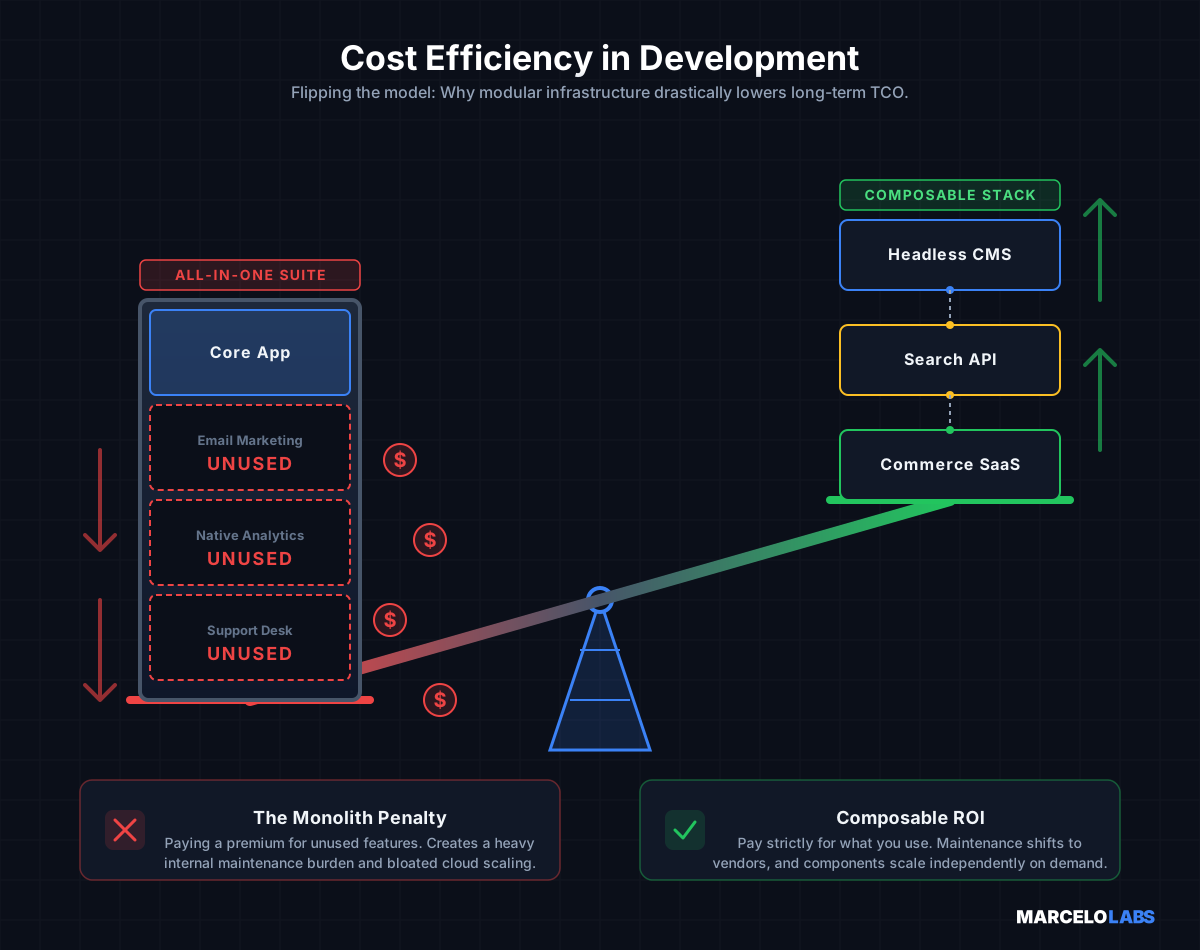
There is a common misconception that adopting a highly customized, modular infrastructure is inherently more expensive than buying an all-in-one suite. While the initial setup phase requires strategic investment, the Total Cost of Ownership (TCO) over time is remarkably lower.
Paying Only for What You Use When you purchase a monolithic software suite, you are paying for every feature included in the box—whether you use it or not. You might be paying a premium for a built-in email marketing tool, even though your team prefers a specialized third-party application.
Composable software flips this model. You only license, build, and maintain the specific components you actually need.
Reduced Maintenance and Cloud Costs Moreover, because you are often assembling best-of-breed SaaS (Software as a Service) products, the burden of maintenance is shifted off your shoulders. The vendor providing your search API is responsible for keeping it updated, secure, and running smoothly. Your internal engineering team spends less time "keeping the lights on" and more time building features that actually drive revenue.
Cloud hosting costs are also dramatically optimized. As mentioned earlier, you can scale individual components rather than the entire system. If only your checkout service is experiencing high traffic, you only pay to scale the servers running that specific service.
Enhanced User Experience
Ultimately, all the backend efficiency in the world doesn't matter if your customers aren't delighted by the end product. The modern consumer expects digital experiences that are lightning-fast, highly personalized, and seamless across every device they use.
When you build composable business applications, you are inherently designing for this level of customer-centricity. Because your backend data is liberated from a single frontend interface, you can deliver that same data anywhere.
True Omnichannel Delivery Imagine a customer adds an item to their cart on your website. Later, they open your mobile app. Because both the website and the app are just different "heads" pulling from the exact same cart API, the transition is flawless. You can push that same experience to a smartwatch, a smart speaker, or a digital kiosk in a physical retail store, all powered by the same backend logic.
Uncompromising Performance and Personalization Furthermore, because you aren't bogged down by bulky legacy code, composable sites perform incredibly well. By utilizing modern web frameworks (like React, Vue, or Next.js) and edge-computing networks, pages load in milliseconds.
You also gain the ability to plug in highly advanced, AI-driven personalization engines. You can track user behavior and dynamically alter the layout, product recommendations, and content of your site in real-time. You are no longer forcing users through a one-size-fits-all funnel; you are dynamically assembling a unique experience tailored to their exact preferences.
Composable Architecture vs. Traditional Approaches
To truly appreciate the elegance of a modular framework, we have to contrast it with the systems we are leaving behind. Let's look at how this modern approach stacks up against traditional setups, and clarify a common point of confusion in the tech world.
Monolithic vs. Composable Architecture
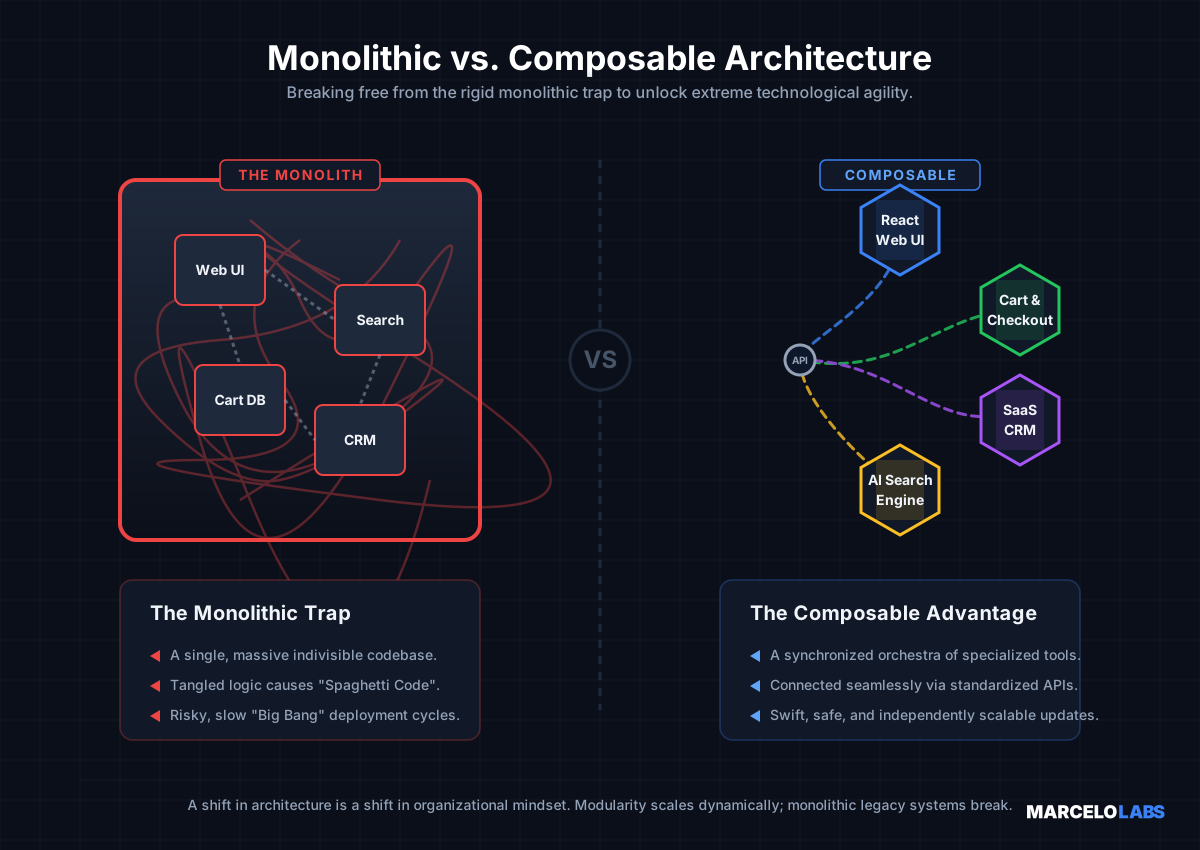
For the better part of two decades, the "Monolith" was the gold standard of software development. A monolithic application is built as a single, indivisible unit. The user interface, the business logic, the data access layer, and the database are all woven tightly together in one massive codebase.
The Monolith: A Double-Edged Sword To be fair, monoliths have their place. For a brand-new startup building a very simple application, a monolith is often the fastest and easiest way to get an MVP (Minimum Viable Product) off the ground. It is easy to test, easy to deploy initially, and simple to monitor because everything is in one place.
However, as a business grows, the monolith becomes a trap.
- The Spaghetti Code Problem: As years go by and different developers add new features, the codebase becomes a tangled mess. Changing a seemingly isolated piece of code can unexpectedly break something on the other side of the application.
- The Scaling Dilemma: To handle more users, you have to duplicate the entire massive application across multiple servers, which is incredibly inefficient.
- The "Big Bang" Deployment: Updating a monolith requires taking the entire system down, deploying the massive new codebase, and praying nothing breaks. If it does, rolling it back is a nightmare.
The Composable Alternative Composable architecture is the direct antidote to the monolithic trap. Instead of a single massive block of code, your business is run by a synchronized orchestra of specialized tools.
Monolithic vs. Composable Comparison
| Feature | Monolithic Architecture | Composable Architecture |
|---|---|---|
| Structure | Tightly coupled, all-in-one suite. | Decoupled, independent modules. |
| Updates | Slow, risky, full system updates required. | Fast, independent, zero-downtime updates. |
| Vendor Reliance | High (Vendor Lock-in). Rely on one company's roadmap. | Low. Swap vendors for any specific feature at will. |
| Scaling | Inefficient. Must scale the entire application globally. | Efficient. Scale only specific components under load. |
| Tech Stack | Rigid. Primary language/framework of the suite only. | Agnostic. Use optimal technologies for each module. |
Comparison with Microservices
As you explore this space, you will inevitably run into the term "microservices." This is where things can get slightly confusing. Many people use the terms interchangeably, but there is a crucial nuance you need to understand.
When evaluating composable architecture vs microservices, it helps to think of it as a matter of scale and business focus.
What are Microservices? Microservices are a deeply technical software development technique. It involves breaking an application down into its absolute smallest, most granular technical functions. For example, in an e-commerce setting, you might have one microservice whose only job is to calculate sales tax. Another microservice's only job is to verify a zip code.
Microservices are amazing for developers because they allow for granular control and scaling. However, to a business leader, a single microservice (like a tax calculator) doesn't mean much on its own. It doesn't represent a complete business solution.
What makes Composable different? Composable architecture takes the technical brilliance of microservices and elevates it to a business-strategy level.
Instead of dealing with hundreds of tiny, granular microservices, a composable framework groups them into what Gartner calls Packaged Business Capabilities (PBCs).
A PBC is a larger, meaningful cluster of microservices that solves a specific business problem. To continue our example: a "Checkout PBC" would encompass the tax calculator microservice, the zip code verifier microservice, the payment gateway microservice, and the inventory deduction microservice.
The Verdict
- Microservices are the how—the granular, technical way developers build modern software.
- Composable Architecture is the what and the why—the business-focused strategy of assembling those technical pieces into fully functional, interchangeable business tools.
You cannot have a truly composable enterprise without microservices running under the hood. But composable architecture is the overarching philosophy that makes those microservices accessible, manageable, and useful to the people actually running the business.
Real-world Applications and Examples
Theory and architectural diagrams are great for whiteboarding sessions, but how does this actually look in the wild? If we strip away the industry buzzwords, what does a modern, modular business application look like on a Tuesday morning when the marketing team needs to launch a campaign, or on Black Friday when server traffic spikes by 400%?
To be incredibly practical, adopting this framework means you stop buying software suites that claim to "do it all" (but usually do most things poorly) and start wiring together specialized tools that do one thing flawlessly. Let’s look at exactly how this operates in practice.
Composable architecture examples in practice
In a real-world scenario, a business doesn’t just flip a switch to become "composable." They construct a tailored technology stack.
Let’s examine a highly realistic setup for a modern digital storefront. Instead of relying on a monolithic legacy platform to handle everything, an engineering team would orchestrate a "best-of-breed" stack that looks something like this:
- The Frontend (The "Glass"): The website itself isn't generated by a backend server. It is built using a modern JavaScript framework like React or Next.js, and hosted on a global edge network like Vercel or Netlify. This ensures pages load in milliseconds, regardless of where the user is geographically located.
- The Content Layer: Instead of a traditional WordPress setup tied to a database, the team utilizes a composable cms (Content Management System) like Sanity or Contentful. Editors write content, and the CMS simply pushes that text via an API to the frontend, a mobile app, or even an in-store digital display.
- The Search Engine: Native site search is often clunky. In this stack, search is handled by a specialized API like Algolia, providing instant, typo-tolerant, AI-driven results.
- The Payment Gateway: Transactions are routed instantly through Stripe or Adyen, completely bypassing the core commerce engine.
- The Customer Data: Personalization and user profiles are managed by a Customer Data Platform (CDP) like Segment.
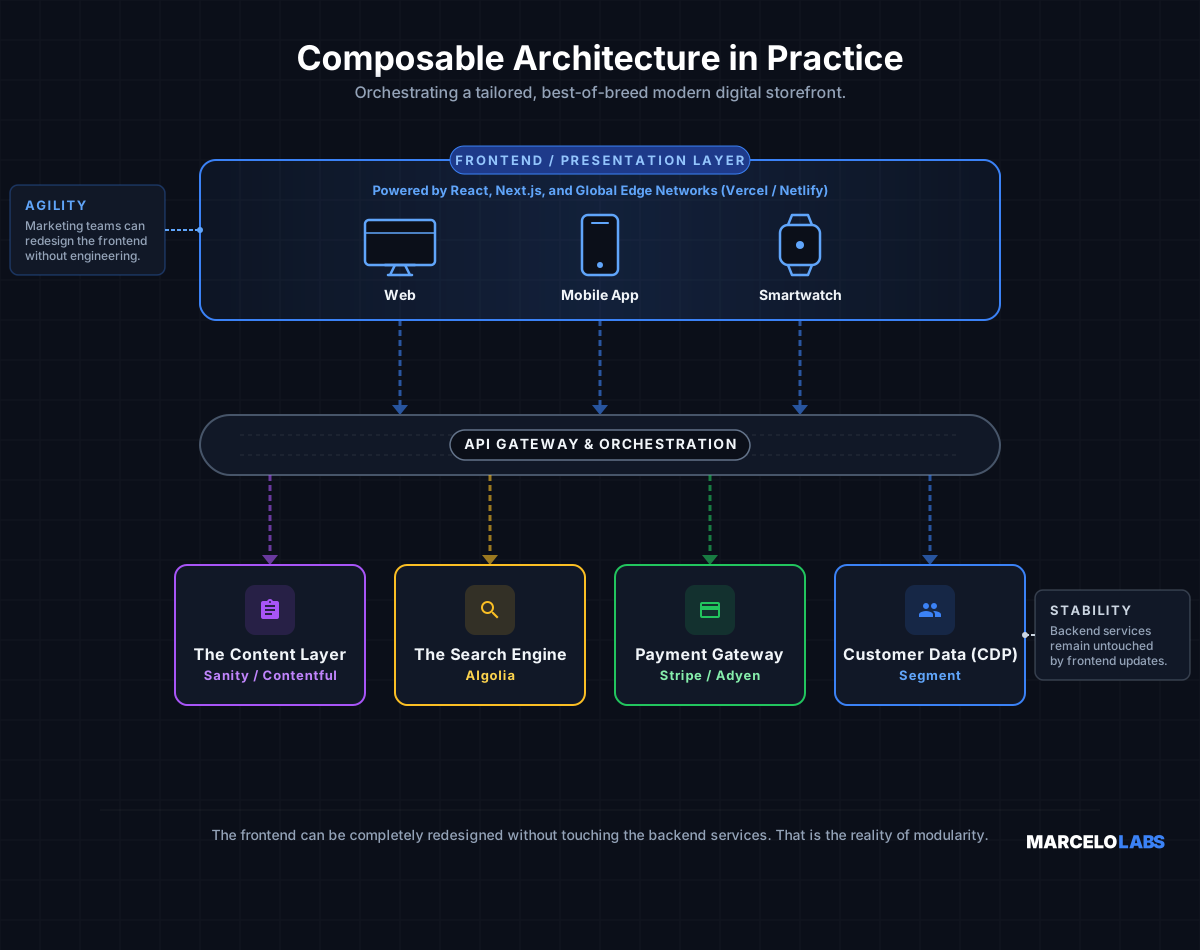
In this practical example, if the marketing team decides to completely redesign the website’s visual theme, they only work with the frontend code. The CMS, the search engine, and the payment gateway remain completely untouched and blissfully unaware of the visual overhaul. That is the reality of modularity.
Case Studies of Composable Systems
Before diving into the data, we must address a very common point of confusion among enterprise leaders evaluating these case studies: the difference between composable commerce vs headless ecommerce.
Many businesses believe they have a modern architecture simply because they went "headless" (separating the frontend website from the backend database). But if your backend is still a massive, rigid, monolithic application from a single vendor, you are just running a "headless monolith." You still face vendor lock-in. True composable commerce goes much deeper—it means the backend itself is modular, broken into independent APIs for pricing, cart, and inventory.
Here is what happens when companies embrace true, top-to-bottom modularity.
LEGO: Rebuilding with Digital Blocks
Perhaps the most fitting example of this architecture comes from a company famous for its physical building blocks: the LEGO Group.
A few years ago, LEGO ran its e-commerce operations on a traditional monolithic platform. During peak shopping events, the sheer volume of traffic challenged the system's tightly coupled database.
LEGO realized they needed a system as modular as their toys. They transitioned to a serverless, event-driven microservices architecture (a core format of composable systems). They broke their monolith down into independent services.
Video Resource: The Serverless Behind LEGO.com
- The Real-World Result: After moving toward a cloud-native microservices architecture, LEGO significantly improved resilience during peak traffic events like Black Friday and gained the ability to scale services independently. Their engineering teams can now deploy updates independently without bringing the entire system offline.
Harry Rosen: Luxury Agility
Harry Rosen, Canada’s premier luxury menswear retailer, found themselves constrained by an aging legacy monolithic platform (SAP Hybris) that was not agile enough to deliver on their customer-first vision.
In 2018, they partnered with Orium (formerly Myplanet) to undergo a massive digital transformation. They adopted a MACH architecture, integrating commercetools as their commerce backend and Amplience as their composable CMS and DAM layer to power their high-end digital storytelling through component-based content modeling.
- The Real-World Result: This modularity allowed them to launch their MVP in an accelerated 16-week deployment schedule. Post-launch, they reported roughly 50% faster deployment cycles after adopting composable infrastructure, alongside response times that were typically 2-4x faster due to modern caching strategies. This transformation is documented in detail by Amplience.
Success Stories in Various Industries
While retail often leads the conversation, the need for agility isn't confined to shopping carts. Organizations across the globe are seeking out the best composable commerce and content solutions to solve complex industry-specific problems.
Electronics & Consumer Goods: Bang & Olufsen
Bang & Olufsen (B&O), the Danish luxury audio brand, struggled with a monolithic platform where their product website and digital store were separate, non-seamless entities. They needed to unify these experiences across 700+ stores and multiple digital channels.
- The Win: B&O implemented a microservices stack with Contentful as their composable CMS and commercetools for commerce. This allowed them to merge their sites into one unified experience and connect online sales with in-store IT systems.
- The Data: According to the Contentful case study, B&O saw massive performance gains:
- 60% increase in e-commerce conversion rate.
- Load times decreased from 16-20 seconds down to just 3-4 seconds.
- Average order value increased by 13%.
- Cart-to-checkout progression more than doubled.
Food & Beverage: Mars (M&M’S)
Mars, the global giant behind iconic brands like M&M’S and Snickers, faced a common enterprise cycle: replatforming their eCommerce stores every three to five years due to an "aging tech stack" that created cracks in their digital foundation. To break this cycle, Mars moved away from "eCommerce in a box" and adopted a sophisticated "Build and Buy" strategy.
- The Win: Mars transitioned to composable commerce by partnering with best-of-breed providers. They "bought" the commodity logic—using commercetools for the commerce engine and Akeneo for Product Experience Management (PXM)—while "building" the unique differentiators in-house.
- The Result: This approach allowed Mars to develop the "M&M’S Configurator," a highly bespoke personalization tool that is unique to their business. By focusing on "buying the commodity and building the differentiation," Mars documented a more agile development process that avoids the technical debt of building standard commerce engines from scratch. This strategic pivot is detailed by commercetools.
A Comparative Look at Real-World Impact
To summarize the practical outcomes these companies experienced, the metrics typically align around a few core key performance indicators (KPIs) documented by implementation partners and vendor case studies:
| Company / Brand | Prior Pain Point | Composable Solution | Real-World Impact |
|---|---|---|---|
| LEGO | Site resilience challenges during peak spikes. | Serverless, microservices. | Improved peak-traffic resilience and independent scaling. |
| Bang & Olufsen | Fragmented global presence; 20s load times. | Contentful + commercetools. | 60% conversion increase and 3-4s load times. |
| Harry Rosen | Legacy monolith (Hybris) lack of agility. | Amplience + commercetools. | 16-week MVP launch and 50% faster deployments. |
| Mars | Replatforming cycle every 3-5 years. | commercetools + Akeneo PXM. | Successful "Build and Buy" strategy focusing on personalization. |
In every practical application, the core thesis holds true: by decentralizing your technology stack, you centralize your business agility and drive measurable financial growth.
Implementing Composable Software Architecture
Up to this point, we have explored the "what" and the "why." We know that modularity brings unprecedented speed, lower long-term costs, and superior user experiences. However, the true challenge for any enterprise lies in the "how."
You cannot simply buy a box of "composability" off the shelf and install it over the weekend. Ripping out a legacy monolith and replacing it with a modern, modular ecosystem is a highly strategic endeavor. It requires careful planning, the right technological foundations, and a fundamental shift in how your teams operate. Let’s look at the practical steps, tools, and methodologies required to make this transformation a reality.
Essential Tools and Technologies
At the heart of this architectural shift is a specific class of technologies designed to communicate flawlessly with one another. When assembling your modern stack, your engineering teams will primarily evaluate tools based on their API capabilities and headless nature.
Here is a practical breakdown of the toolchain required:
- The Orchestration Layer (API Gateways): This is the air traffic controller of your application. Tools like Apollo GraphQL or MuleSoft sit between your frontend website and your backend services. When a user requests a webpage, the orchestration layer simultaneously queries your CMS, your pricing engine, and your inventory database, stitching the data together instantly.
- Headless Content & Commerce Platforms: Moving away from all-in-one suites, businesses leverage specialized platforms. Content is managed in headless CMS platforms like Contentful or Sanity, while commerce functionality is driven by API-first engines like commercetools or Elastic Path.
- Modern Frontend Frameworks: The user interface must be incredibly fast and decoupled from the backend. Web developers heavily utilize JavaScript frameworks like React, Next.js, or Vue. Interestingly, this modular philosophy extends all the way to native mobile development as well. For instance, engineering teams building highly complex iOS applications often adopt the swift composable architecture—a specific state-management framework that ensures their Apple mobile apps remain predictable, testable, and strictly modular, mirroring the philosophy of the backend.
Building a composable enterprise architecture
It is a well-known adage in software engineering that "organizations design systems that mirror their own communication structures" (Conway's Law). You cannot successfully run a decoupled, modular technology stack if your internal business teams are rigidly siloed and slow-moving.
Therefore, building a composable enterprise architecture is as much about people and processes as it is about software.
Domain-Driven Design (DDD) Before writing a single line of code, technical leaders must work with business stakeholders to map out the company’s "domains." A domain is a specific area of business expertise. For an e-commerce company, domains might include "Customer Identity," "Order Fulfillment," and "Product Catalog."
Instead of having one massive IT department managing everything, you assign cross-functional teams to each domain. The "Order Fulfillment" team gets their own product managers, frontend developers, and backend engineers. They are solely responsible for choosing, building, and maintaining the APIs related to fulfillment. This organizational modularity allows your enterprise to move incredibly fast.
Laying out the composable technology architecture
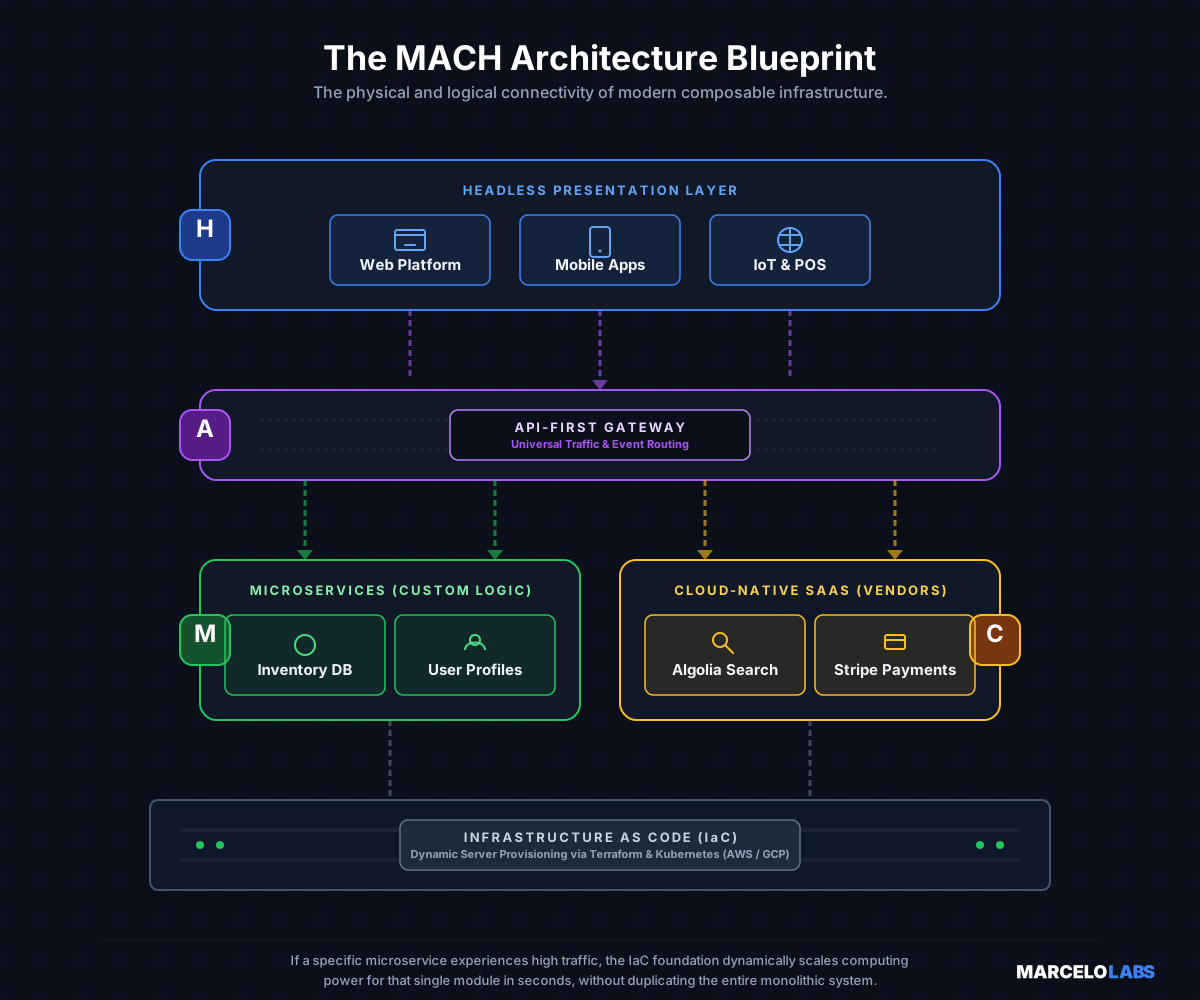
Once the business domains are defined, you can begin laying out the composable technology architecture. This is the literal blueprint of how your servers, databases, and APIs will physically and logically connect.
When architecting this layout, modern engineering teams adhere strictly to the MACH principles:
- Microservices: The granular business logic.
- API-first: All functionality is exposed via APIs; there are no hidden databases.
- Cloud-native SaaS: Leveraging external vendors for specific functions to reduce maintenance.
- Headless: Strict separation of the frontend UI and backend logic.
At the bedrock of this setup is your composable infrastructure. Gone are the days of manually configuring physical servers in a basement. Modern teams use "Infrastructure as Code" (IaC) tools like Terraform or Kubernetes. This allows engineers to automatically provision, scale, and tear down cloud server environments (on AWS, Google Cloud, or Azure) using simple scripts. If a specific microservice needs more memory, the infrastructure dynamically composes the necessary computing power in seconds.
Strategies for Transitioning to a Composable Framework
The single biggest mistake a company can make when adopting this model is attempting a "Big Bang" rewrite. Trying to rebuild a 10-year-old monolithic system from scratch behind closed doors is a recipe for budget overruns, endless delays, and catastrophic launch-day failures.
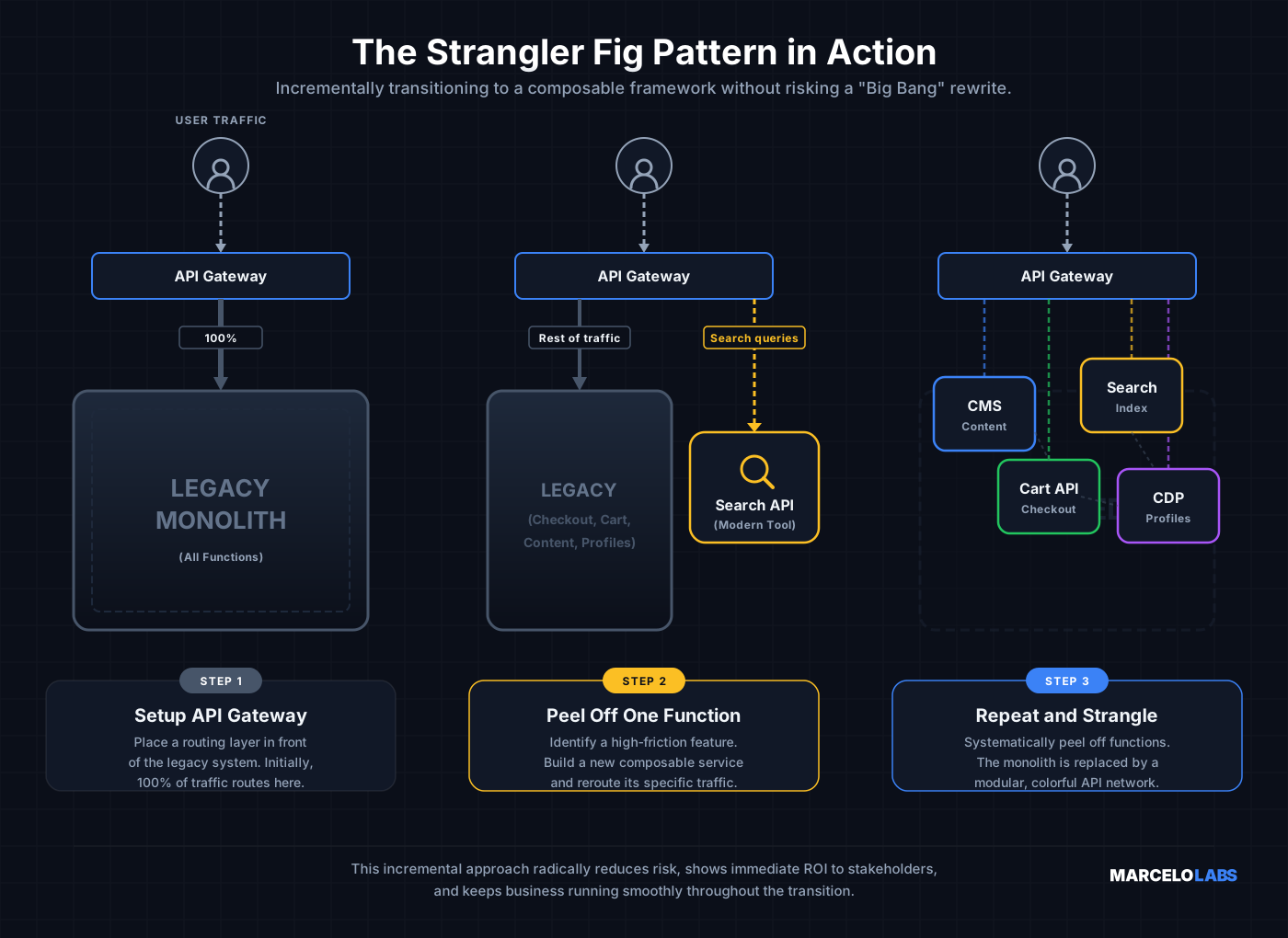
Instead, the most successful Strategies for Transitioning to a Composable Framework rely on incremental migration. The industry standard for this is the Strangler Fig Pattern.
The Strangler Fig Pattern in Action Named after a type of vine that slowly grows around a tree until it replaces it, this strategy allows you to modernize safely, piece by piece.
- Put an API Gateway in Front: You place a modern routing layer in front of your old monolithic legacy system. Initially, 100% of your web traffic still goes through the monolith.
- Peel Off One Function: You identify one specific feature that is causing pain—for example, site search. You build or buy a modern, composable search API.
- Reroute Traffic: You tell the API gateway to send all search queries to the new, modern search engine, while everything else (checkout, content, user profiles) continues to route to the old monolith.
- Repeat and Strangle: Once search is stable, you peel off the next function—perhaps the shopping cart. You route cart traffic to the new cart API.
Over months or years, you slowly "strangle" the monolith. Eventually, the old legacy system is handling nothing but legacy data, and you can safely turn it off. This incremental approach radically reduces risk, allows you to show immediate ROI to stakeholders, and keeps your business running smoothly throughout the transition.
Conclusion
We began this exploration by comparing legacy software to a precarious tower of blocks, where a single change threatened the stability of the entire enterprise. Today, that risk is no longer an acceptable cost of doing business.
The shift away from rigid, monolithic suites toward highly adaptable, modular ecosystems is not merely a passing technological trend. It is a fundamental evolution in how value is delivered in the digital economy. By decoupling your frontend experiences from your backend logic, relying on API-first communication, and selecting best-of-breed components, you are no longer just building software—you are building business resilience.
The Future of Composable Architecture
As we look toward the horizon, the principles of this architecture will only become more vital. We are entering an era of hyper-personalization, driven by Artificial Intelligence and machine learning. To effectively integrate AI-driven product recommendations, dynamic pricing models, or automated customer service bots, your underlying systems must be open, flexible, and API-driven.
The future of digital development belongs to the agile. By embracing composable software architecture today, you ensure that no matter what new device, customer preference, or technological breakthrough emerges tomorrow, your business will have the exact building blocks required to adapt, assemble, and succeed.