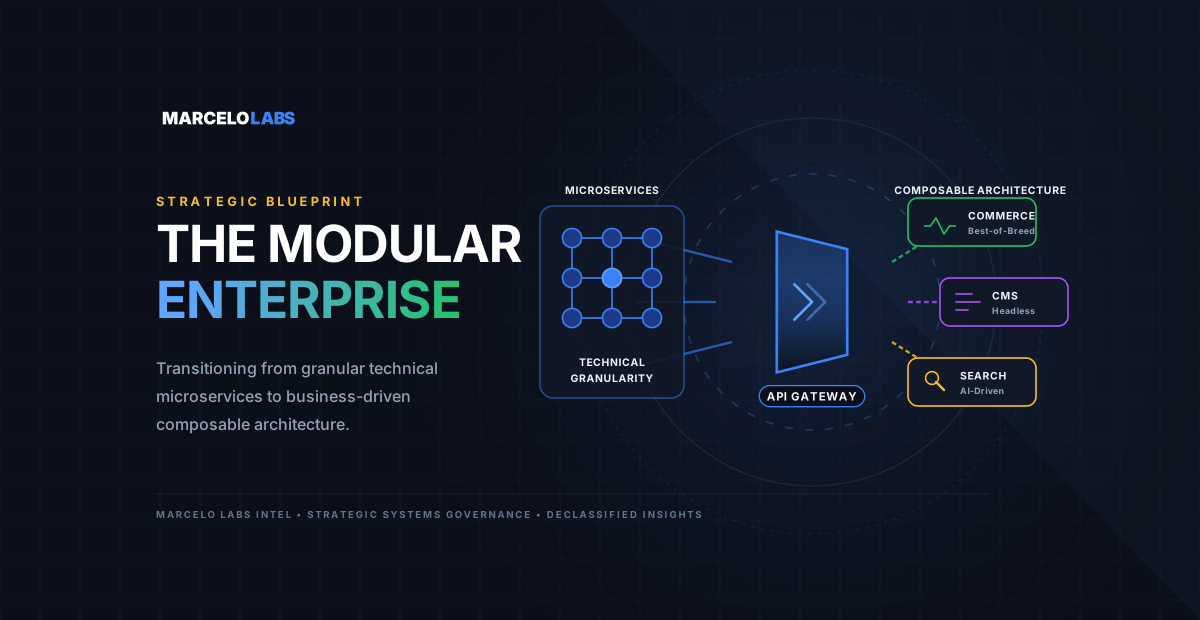
Decoding Composable Commerce: The Definitive Guide for Modern Retail
Discover how composable commerce works, its key benefits, and why enterprise retailers are moving to modular, API-driven architectures.


For over a decade, brands relied on rigid, all-in-one eCommerce suites to power their online storefronts. These monolithic platforms provided a comfortable, "out-of-the-box" experience, but as consumer expectations evolved—demanding instant load times, highly personalized journeys, and seamless omnichannel shopping—these legacy systems became digital anchors, slowing down innovation and inflating technical debt.
Today, enterprise brands and aggressive digital disruptors are actively decoding composable commerce—shifting away from vendor lock-in toward modular flexibility. By adopting this decentralized approach, businesses are regaining the agility required to compete in a rapidly changing market.
In this comprehensive guide, we will explore every facet of composable ecommerce, from foundational definitions to strategic implementation, helping you determine if this architectural shift is the right move for your digital storefront.
Short on time? Listen to the episode of this article on Spotify.
What Does Composable Commerce Mean?
When executive teams evaluate a platform migration, understanding the core concept is the first critical step. So, what does composable commerce mean in a practical, business context?
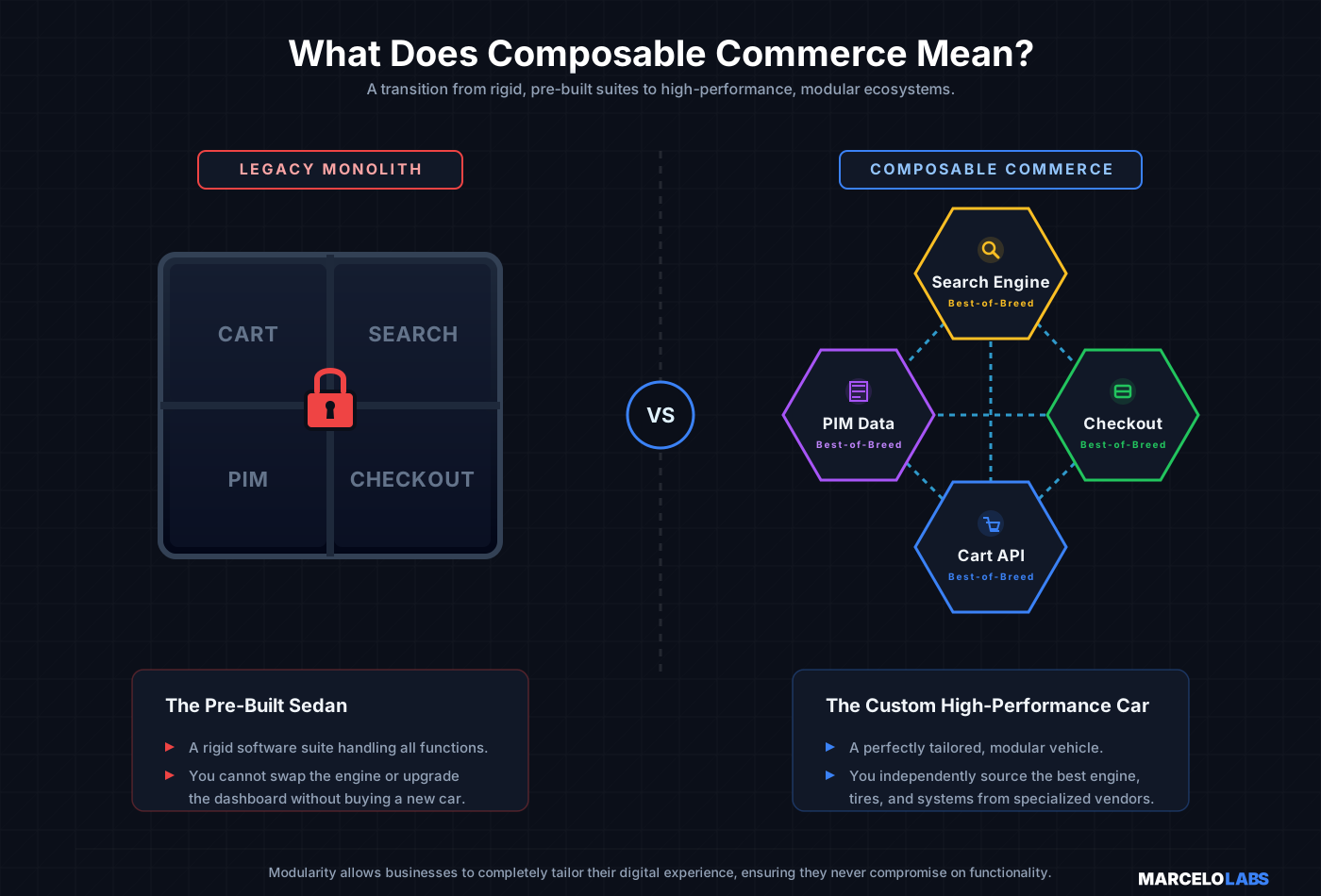
At its core, the standard composable commerce definition refers to a modern development approach where digital commerce platforms are built by selecting, integrating, and assembling independent, best-of-breed software components. Instead of buying a single, rigid software suite that handles your shopping cart, product catalog, user reviews, and payment processing, you choose specialized vendors for each of these functions and connect them together.
To have composable commerce explained without the dense technical jargon, think of it like building a custom high-performance car. Rather than buying a pre-built sedan off the lot where you cannot change the engine or the dashboard, you are sourcing the best tires from one manufacturer, the best engine from another, and the best sound system from a third.
This inherent modularity is exactly why composable commerce is different from traditional legacy systems. It allows businesses to perfectly tailor their digital experience to their unique customer base, ensuring they are never forced to compromise on functionality.
How Does Composable Commerce Work?
To move past the buzzwords, we need to look at exactly how composable commerce works under the hood.
The foundation of any composable commerce technology stack relies heavily on APIs (Application Programming Interfaces). APIs act as the universal translators that allow disparate software systems to communicate with one another securely and instantly.
If you are wondering, " how does composable commerce work in real-time?", imagine a user clicking "Search" on your website:
- The frontend website sends an API call to your dedicated Search Vendor (like Algolia).
- The Search Vendor instantly returns the relevant product results.
- Simultaneously, an API call is sent to your Pricing Engine to fetch the localized cost of those specific items.
- All of this data is stitched together and presented to the user in milliseconds.
This level of real-time orchestration is the hallmark of a true composable commerce architecture. It breaks the entire buying journey down into individual "Packaged Business Capabilities" (PBCs)—such as an independent checkout service, an independent inventory tracker, or an independent promotional engine.
Deconstructing the monolith: How composable architecture drives enterprise retail agility.
The Power of the Composable Commerce Frontend
A critical element of this setup is the composable commerce frontend. In this architecture, the "head" (the visual website, mobile app, or smart-kiosk interface that the customer actually interacts with) is completely decoupled from the backend databases.
By utilizing a headless frontend framework (like React or Next.js), marketing and design teams can redesign the website layout, launch new promotional pages, or change the user interface on the fly without ever needing backend engineers to rewrite complex database code.
Why Composable Commerce Matters Today
Transitioning to a modular framework is a significant organizational undertaking. So, why does composable commerce matter enough to justify the investment?
The answer lies in market adaptability. Ultimately, why composable commerce matters to modern C-suites comes down to risk mitigation and speed to market. During rapid market shifts—such as the sudden surge in mobile shopping, the rise of social commerce, or the integration of AI-driven personalization—brands stuck on legacy platforms often find themselves waiting months for their vendor to release an update.
The primary reason why composable commerce is important is that it places architectural control back into the hands of the business. If a new, highly effective AI product recommendation tool hits the market, a composable brand can integrate it via API in a matter of days, completely bypassing their core commerce engine's roadmap.
This unprecedented agility is precisely why composable commerce is popular among market leaders. It transitions IT departments from being rigid bottlenecks into strategic enablers. This retail-specific evolution is actually part of a much broader enterprise movement toward composable software architecture, where entire corporate infrastructures are systematically decoupled to achieve maximum operational flexibility.
Key Benefits of Composable Commerce
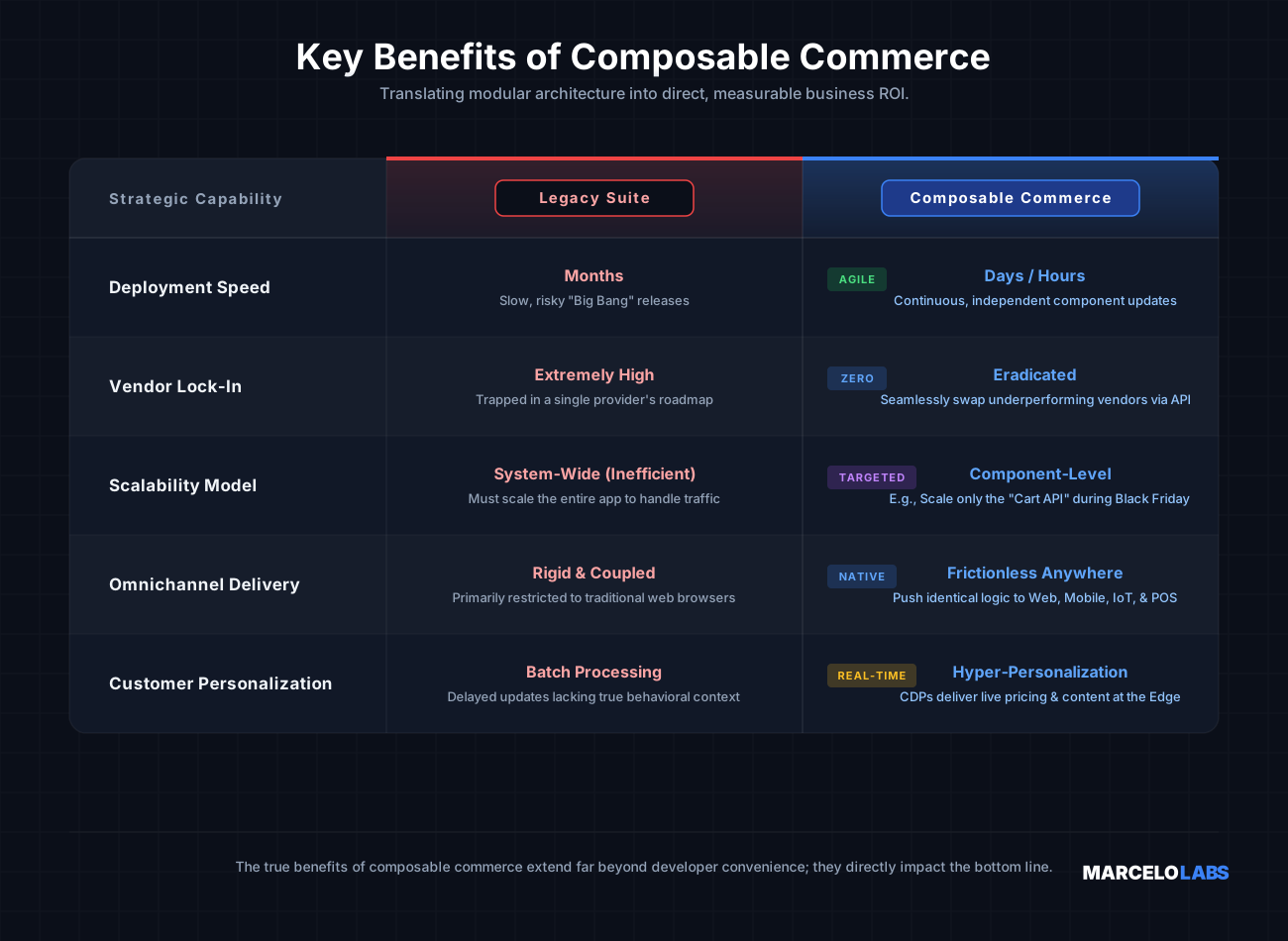
When migrating away from legacy systems, ROI must be clear and measurable. The true benefits of composable commerce extend far beyond making developers happy; they directly impact the bottom line and customer satisfaction.
Here are the key benefits of composable commerce that drive enterprise adoption:
- Eradication of Vendor Lock-In: One of the greatest composable commerce advantages is the complete eradication of vendor lock-in. If your search provider raises their prices, or your email marketing tool stops innovating, you can seamlessly swap them out for a competitor without dismantling your entire website.
- Omnichannel Perfection: Because your backend data is separated from the frontend presentation, you can push your product catalog and checkout process to any device—web, mobile, smartwatches, IoT devices, or physical point-of-sale systems—with zero friction.
- Hyper-Personalization at the Edge: Composable systems allow you to integrate advanced Customer Data Platforms (CDPs) effortlessly, delivering personalized pricing, content, and product recommendations in real-time based on live user behavior.
Achieving Ultimate Scalability
A standout benefit is how this modular framework handles massive traffic spikes. Achieving true scalability in composable commerce is highly targeted. During a major sales event like Black Friday, you do not need to pay to scale your entire massive application. If your shopping cart is the only component under heavy load, your cloud infrastructure will automatically scale up just the "Cart API" module to handle the traffic, resulting in zero downtime and dramatically optimized server costs.
Composable Commerce vs MACH Architecture
As you research this space, you will frequently encounter the acronym MACH (Microservices, API-first, Cloud-native, Headless). This leads to a common point of confusion for technical directors: understanding the nuance of composable commerce vs mach architecture.
Are they the exact same thing? Not quite, though they are deeply intertwined.
- MACH Architecture represents the underlying technical criteria. It is the stringent set of engineering principles (Microservices, APIs, Cloud, Headless) that modern software should adhere to.
- Composable Commerce represents the business strategy. It is the act of taking those MACH-certified technical components and strategically assembling them into a customized digital storefront that actively drives revenue.
Think of MACH as the high-quality building materials (the steel, the glass, the wiring), while Composable Commerce is the blueprint and the act of constructing the building to serve your specific business needs.
Real-World Composable Commerce Examples and Strategy
Theory is one thing, but execution is another. Looking at real-world composable commerce examples helps clarify how transformative this strategy can be in practice.
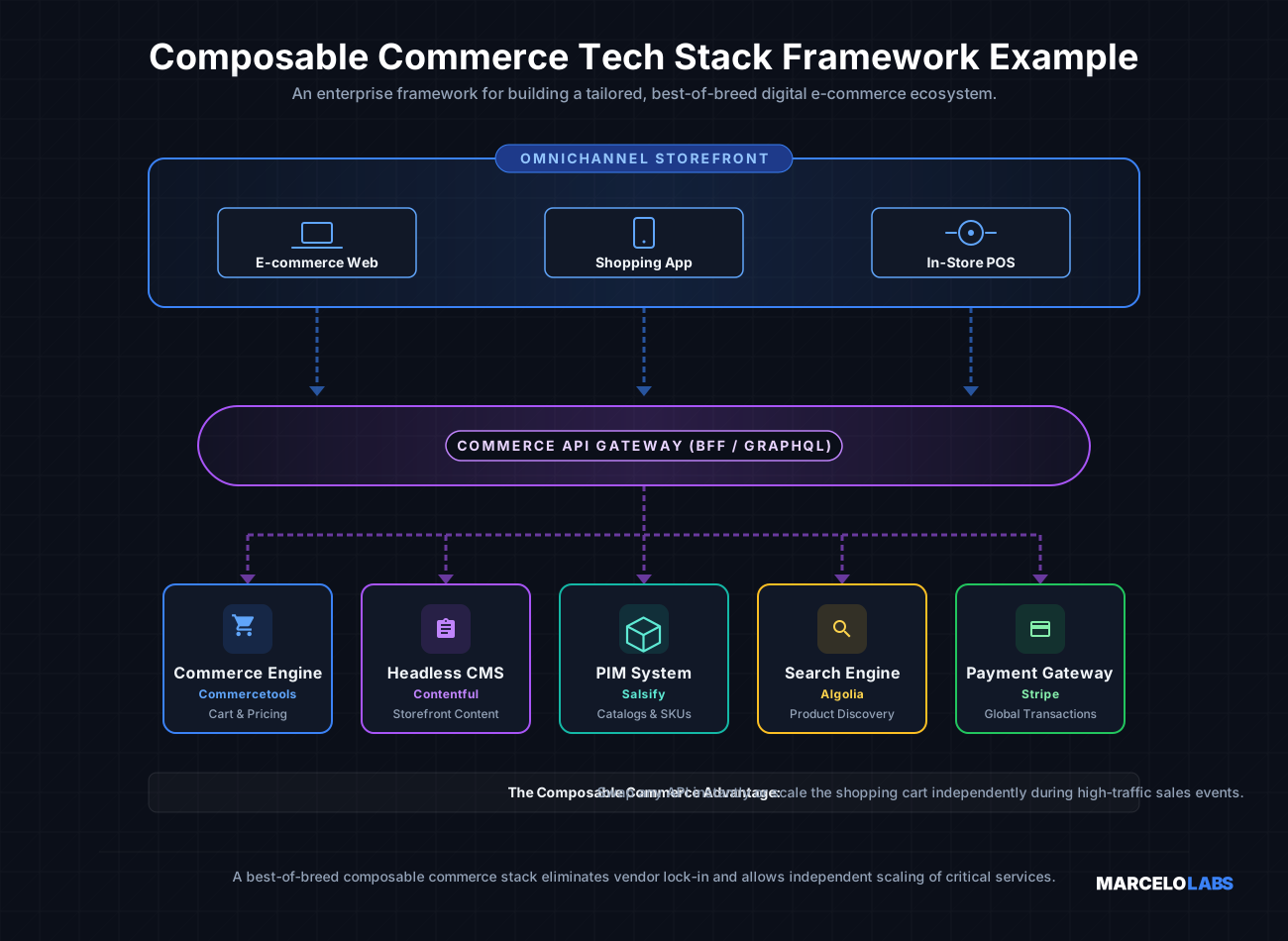
Consider a global cosmetics brand moving away from a traditional suite. In a modern setup, their architecture might look like this:
- Commerce Engine: commercetools (handling complex pricing, promotions, and carts).
- Content Management: Contentful or Sanity (delivering rich blog posts, localized copy, and tutorials).
- Search & Discovery: Algolia (powering typo-tolerant, lightning-fast search queries).
- Payments: Stripe (handling global, multi-currency checkout routing).
The Strategic Edge: Composable Commerce for D2C
This modular architecture is particularly lethal in the Direct-to-Consumer space. Leveraging composable commerce for D2C brands allows for incredibly rapid iteration. D2C brands live and die by their brand experience, storytelling, and conversion rate optimization. Because the frontend is completely decoupled, D2C marketing teams can run aggressive A/B tests on landing pages, launch influencer-specific storefronts, and tweak the user interface daily without ever worrying about breaking the backend order management system.
Building Your Tech Stack: Platforms, Solutions, and Requirements
Transitioning to this modern framework requires a highly calculated approach to vendor selection. You are no longer buying one monolithic software package; you are actively building an ecosystem.
Composable Commerce Requirements
The foundational composable commerce requirements revolve around organizational maturity just as much as technology. Your engineering team must be comfortable managing APIs and orchestrating different microservices. You also need a shift in business mindset—marketing and IT must collaborate closely, utilizing Agile methodologies to continuously deploy updates.
Composable Commerce Strategy Components Selection
Navigating your composable commerce strategy components selection is the secret to a successful migration. You must audit your critical business domains before buying any software. Do you need a highly complex PIM (Product Information Management) system to handle a million SKUs, or is a robust OMS (Order Management System) more critical for your complex shipping logistics? You select components based purely on your specific operational bottlenecks.
Selecting Your Core Engine
While you will be combining many specialized tools, you will still need a foundational composable commerce platform to act as the central backbone for your transactional data. Providers like commercetools, Elastic Path, and Spryker are currently leading the charge in this space. They provide the core APIs for carts, catalogs, and checkouts that you will build the rest of your tailored composable commerce solution around.
Because of the technical complexity involved, partnering with specialized system integrators (SIs) who offer dedicated composable commerce services is highly recommended to help stitch these various APIs together via a robust orchestration layer.
(Curious about which vendors lead the pack? Read our upcoming strategic breakdown of the best composable commerce platforms for enterprise architecture.)
Understanding Composable Commerce Pricing
A major consideration for the C-suite is the financial model. Navigating composable commerce pricing operates fundamentally differently from legacy monolithic licensing.
With legacy platforms, you pay a massive annual licensing fee that covers every feature in the box—including the 40% of features your team never uses. You also pay a premium for vendor-managed hosting and forced, system-wide upgrades.
Composable pricing models are generally consumption-based and highly modular. You only pay for the specific services you actively subscribe to (e.g., you pay your search vendor based on query volume, and your commerce engine based on API calls or total order volume).
The Total Cost of Ownership (TCO) Reality: While the initial Capital Expenditure (CAPEX) of a composable migration can be higher—because you have to physically build the frontend and wire the APIs together—the long-term Operating Expenses (OPEX) and Total Cost of Ownership are often significantly lower. You eliminate bloated software licensing fees, drastically reduce hosting costs through targeted scalability, and save thousands of engineering hours that used to be wasted on maintaining complex, intertwined legacy code.
Conclusion
The era of compromising your customer experience to fit the limitations of your software vendor is over. Composable commerce represents a paradigm shift, giving enterprise retailers the ultimate flexibility to build, adapt, and scale their digital storefronts at the speed of modern commerce.
By strategically selecting best-of-breed components and embracing API-first architecture, businesses can future-proof their operations, ensuring that they are always ready to integrate the next wave of technological innovation—long before their competitors on legacy platforms even begin their update cycles.