Composable Commerce vs Headless Ecommerce: Which Architecture Fits Your Business?
Evaluate the future of your digital storefront by comparing composable commerce vs headless ecommerce. Understand which architecture aligns with your technical maturity and long-term business goals.


If you are evaluating the future of your digital storefront, you have likely encountered a sea of architectural buzzwords. Two of the most prominent—and frequently confused—terms are headless commerce and composable commerce.
While both approaches aim to modernize the customer experience and break away from rigid, legacy monoliths, they are not interchangeable. In fact, choosing the wrong framework can lead to over-engineered complexities or under-powered scalability.
As a consultative guide, this article breaks down the technical and strategic differences between these two methodologies. We will explore the nuances of composable commerce vs headless ecommerce, helping you determine which approach aligns with your current technical maturity, budget, and long-term business goals.
The Baseline: What is Headless Ecommerce?
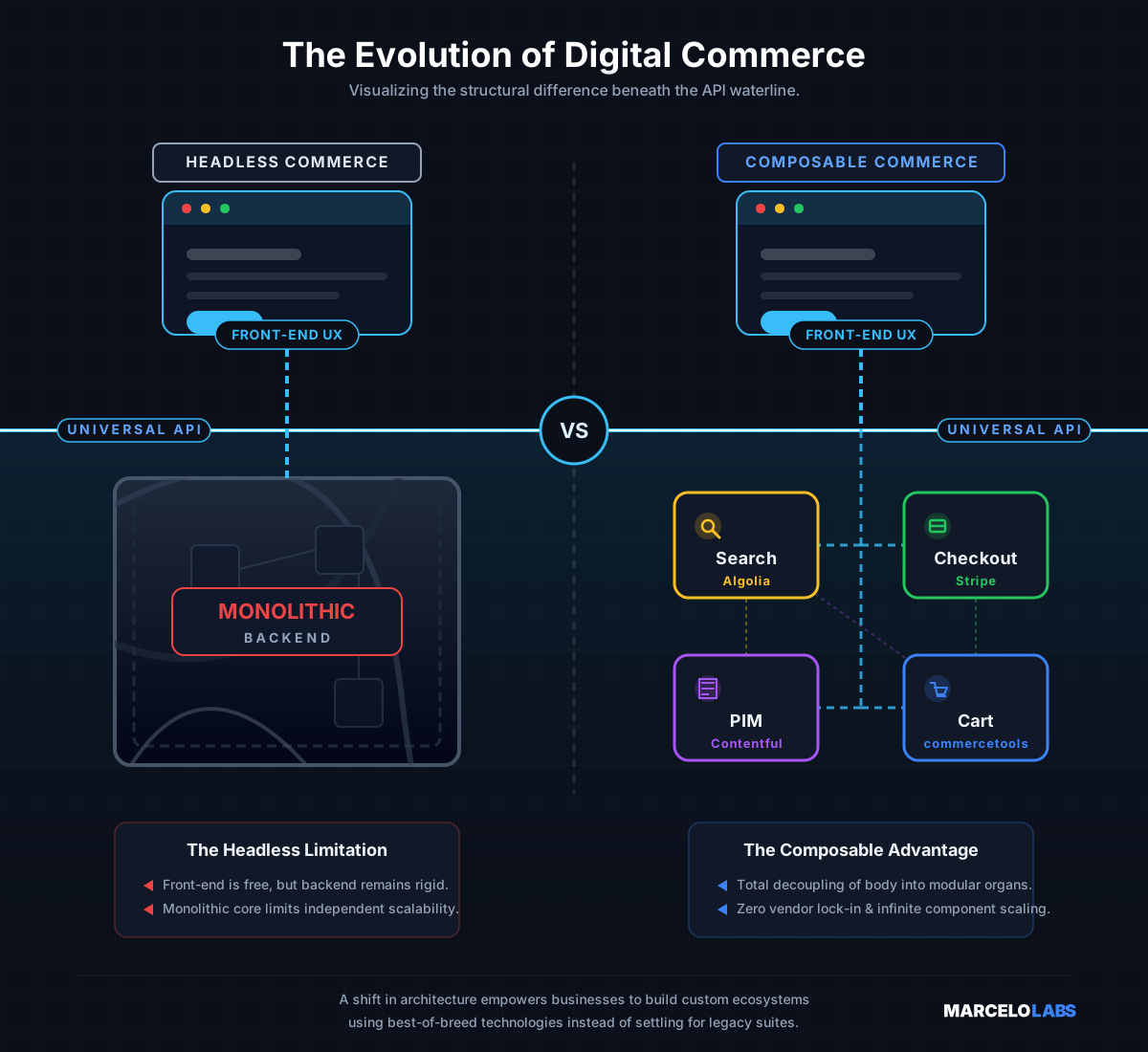
To understand the comparison, we must first define the starting point. Headless commerce is an architectural pattern that separates the "head" (the front-end user interface or storefront) from the "body" (the back-end commerce logic and database).
By decoupling these layers and connecting them via APIs, businesses gain the freedom to build custom, lightning-fast user experiences—whether on a web browser, a mobile app, a smart watch, or an IoT device—without altering the underlying backend engine.
The Headless Advantage:
- Front-end Freedom: Developers can use modern frameworks (like React or Vue.js) to build highly customized UIs.
- Omnichannel Delivery: Push products to any digital touchpoint instantly.
- Speed to Market: Marketing teams can update the front-end experience without waiting for backend development cycles.
However, in a purely headless setup, the backend often remains a single, monolithic system.
The Next Evolution: What is Composable Commerce?
If headless commerce separates the head from the body, composable commerce goes a step further: it breaks the body itself down into individual, specialized organs.
Built on MACH architecture (Microservices, API-first, Cloud-native, Headless), composable commerce allows you to select best-of-breed vendors for every single function of your e-commerce stack. Instead of an all-in-one backend platform, you might combine a specialized search engine (like Algolia), a dedicated checkout service, a standalone PIM (Product Information Management), and a localized payment gateway.
The Composable Advantage:
- Zero Vendor Lock-in: Swap out underperforming components without tearing down the entire system.
- Infinite Scalability: Scale specific microservices (like the shopping cart during a Black Friday sale) independently.
- Ultimate Agility: Build a highly tailored tech stack that precisely fits your unique business logic.
The Core Difference: Composable Commerce vs Headless Ecommerce
The fundamental distinction that matters most for technical leaders is this: Every composable architecture is headless, but not every headless implementation is composable.
When analyzing composable commerce vs headless ecommerce, it comes down to the scope of your decoupling. Headless solves front-end presentation challenges. Composable solves systemic back-end rigidity.
Quick Comparison Table
| Feature | Headless Ecommerce | Composable Commerce |
|---|---|---|
| Architectural Scope | Decouples Front-end from Back-end. | Modularizes the entire stack (Front & Back). |
| Backend Structure | Often relies on a traditional monolith. | Microservices (MACH Architecture). |
| Vendor Approach | Single primary vendor for commerce logic. | Multi-vendor, best-of-breed components. |
| Technical Maturity | Moderate. | High (Requires robust orchestration). |
| Primary Benefit | Omnichannel UX and design freedom. | Ultimate flexibility and system agility. |
Composable vs Headless: Exploring the Tech Stack
When comparing composable vs headless, you have to look at the day-to-day management of your tech stack.
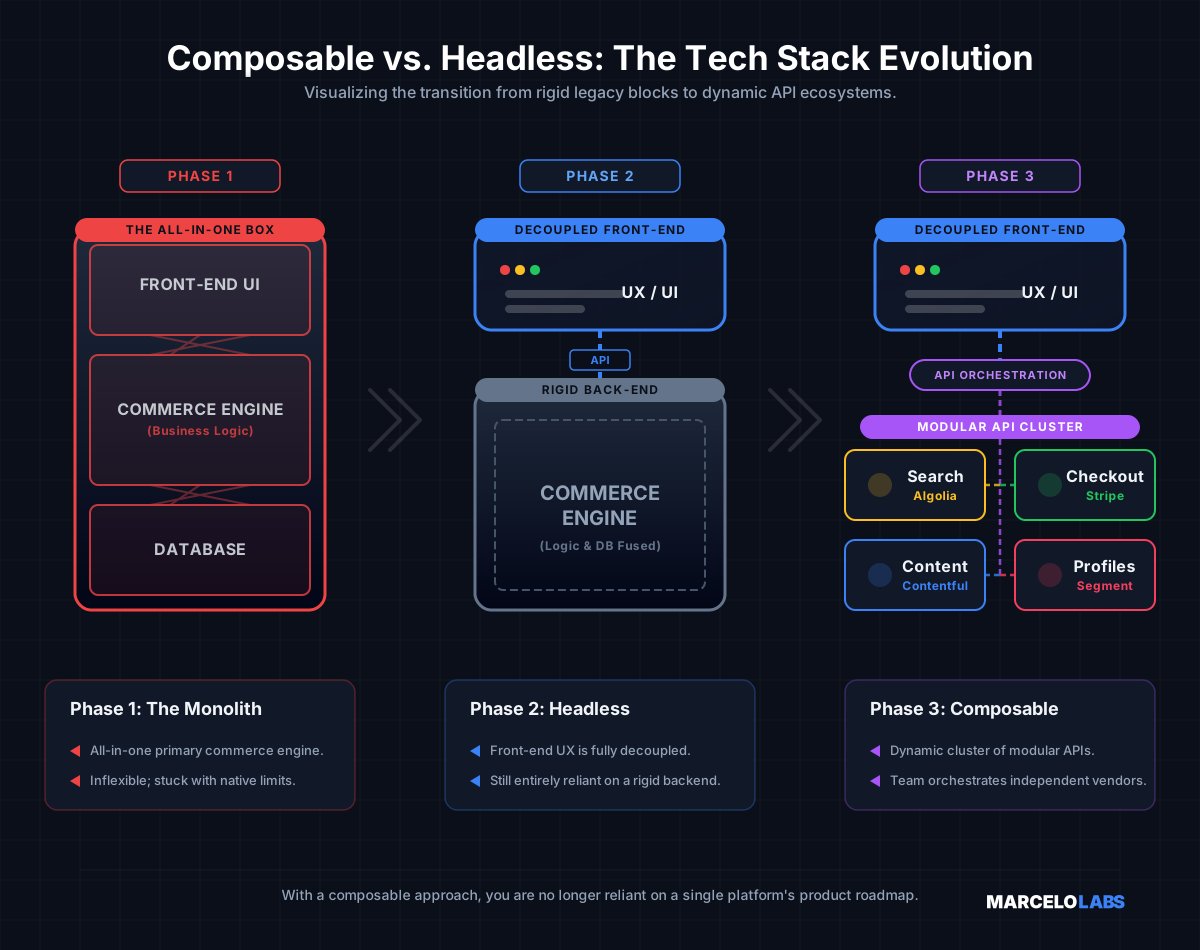
With a traditional headless approach, your IT team manages one primary commerce engine. It's simpler to maintain, but if that engine’s native search functionality is poor, you are largely stuck with it.
With a composable approach, your stack is highly fragmented but incredibly powerful. You are no longer reliant on a single platform's product roadmap. However, this introduces complexity. Your team (or your agency partner) becomes an orchestrator, managing APIs, SLAs, and updates across multiple independent software vendors (ISVs).
Composable Commerce vs Headless Commerce: Use Cases & When to Choose Which
Which one should you invest in? Here is a strategic breakdown of composable commerce vs headless commerce based on business needs.
When to Choose Headless Commerce
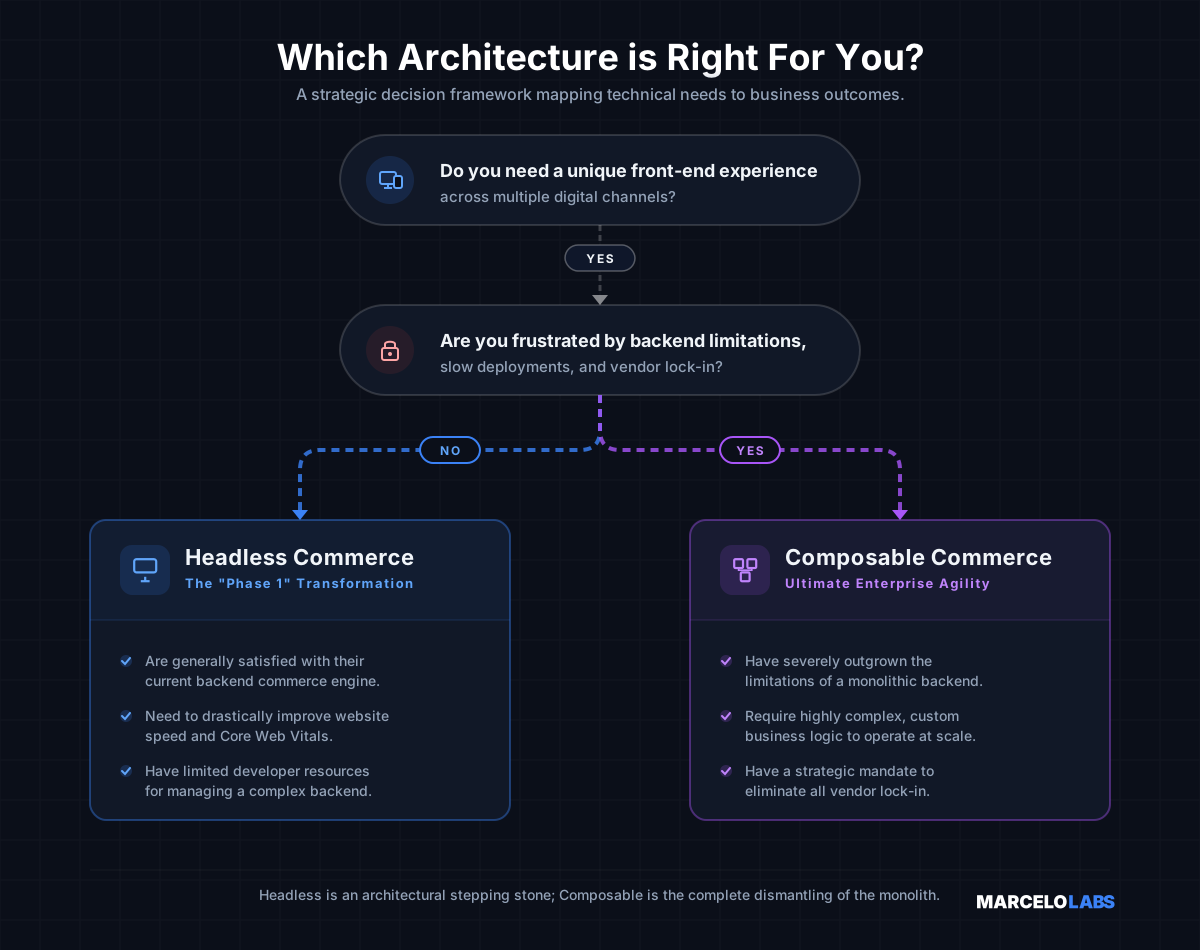
Headless is often the ideal "Phase 1" of a digital transformation. It is best suited for organizations that:
- Are generally satisfied with their current backend commerce engine (like Shopify Plus, BigCommerce, or Adobe Commerce).
- Need to drastically improve website speed and Core Web Vitals.
- Want to deliver content to new channels (mobile apps, smart displays) quickly.
- Have limited developer resources for managing a complex, multi-vendor backend.
When to Choose Composable Commerce
Composable is the ultimate destination for enterprise agility. It is the right choice for organizations that:
- Have outgrown the limitations of their current monolithic backend.
- Require highly complex, custom business logic that out-of-the-box platforms cannot support.
- Want to mitigate risk by eliminating vendor lock-in.
- Have a high degree of technical maturity and a capable engineering team to orchestrate multiple microservices.
Integrating with Your Broader Tech Strategy
Choosing between these commerce architectures shouldn't happen in a vacuum. Your e-commerce platform is just one piece of your organization's digital ecosystem.
For companies looking to future-proof their entire operations—from ERPs and CRMs to supply chain management—adopting a modular approach to commerce is often the first step toward a broader organizational shift. To understand how this fits into your overarching enterprise IT strategy, we highly recommend reading our deep dive on composable software architecture. Understanding the pillar concepts of composability will help you align your e-commerce goals with your company's broader digital transformation.
Composable Commerce vs Headless: The Verdict
The debate between composable commerce vs headless isn't about which technology is inherently "better"—it is about which methodology matches your current stage of growth.
- Think of Headless as renovating the facade of your retail store while keeping the backroom warehouse exactly the same. It looks great to the customer and is relatively quick to execute.
- Think of Composable as completely rebuilding your supply chain, warehouse, and storefront from the ground up using the best contractors in the world for each specific job. It is a heavier lift, but it yields an unmatched operational advantage.
If you are looking to create beautiful, fast storefronts with lower initial overhead, start with headless. If your goal is total ownership, limitless scalability, and the agility to outpace competitors on a granular level, composable commerce is the architecture of the future.