The Essential ISO 27001 Procedures You Need for Compliance
Discover the essential ISO 27001 procedures needed to align security with business objectives, manage risk, and achieve verifiable global compliance.

Protecting your organization’s core value requires more than just defensive technology; it demands a strategic governance framework. Implementing standardized iso 27001 procedures allows leadership to align security with business objectives, ensuring that every operational layer satisfies global regulators and fosters the high-level trust expected by your most sophisticated partners.
The ISO/IEC 27001 is globally recognized as the definitive information security management system standard. It provides a systematic, risk-based approach to managing sensitive information, ensuring that security is treated as a core business process rather than just a series of IT tickets. In this comprehensive guide, we will explore the procedural foundation required to not only achieve compliance but to foster genuine organizational resilience.
Understanding ISO 27001
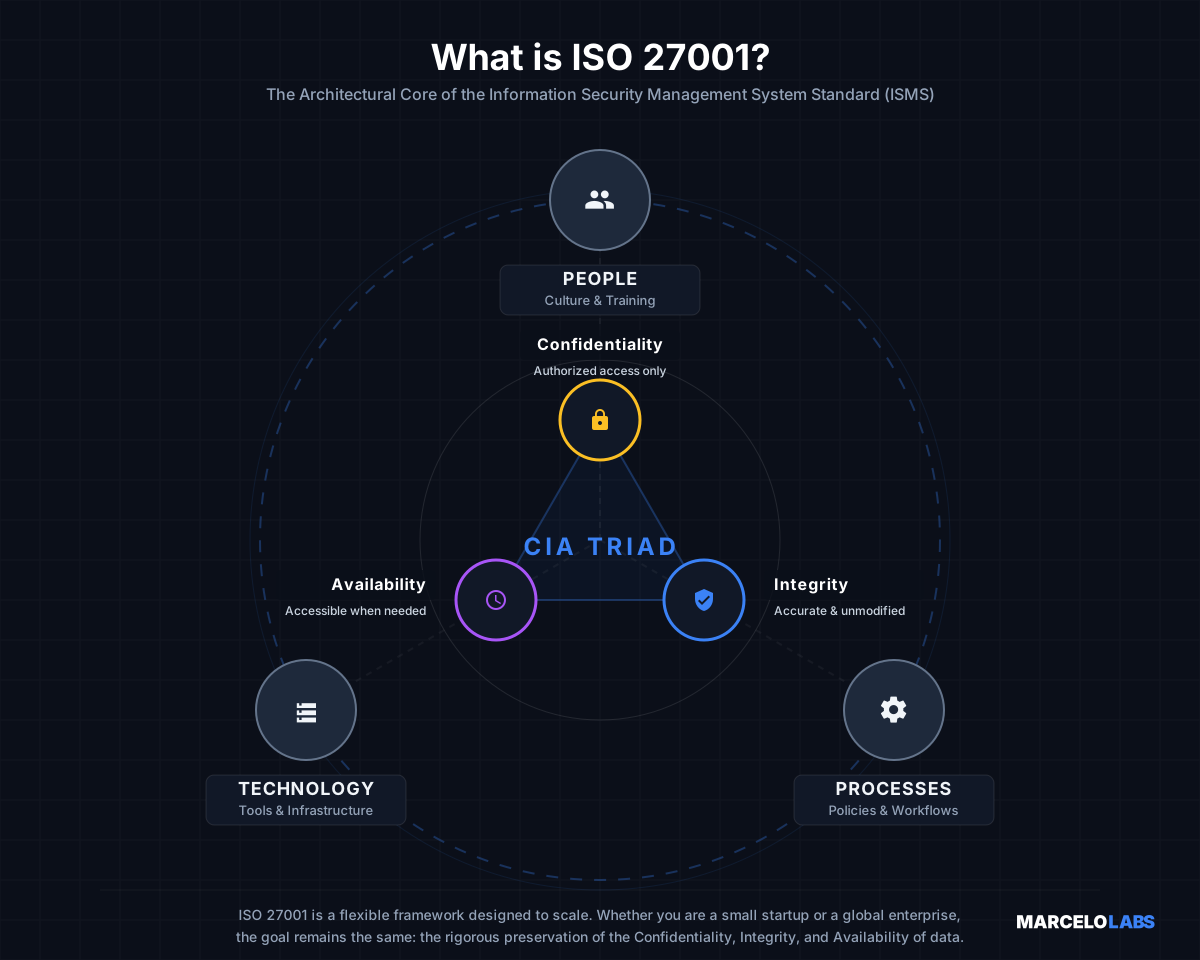
To implement the standard effectively, one must first understand that the family of iso27001 standards is not a static set of rules. Instead, it is a flexible framework designed to scale with your organization. Whether you are a small startup or a global enterprise, the goal remains the same: the preservation of the "CIA Triad"—Confidentiality, Integrity, and Availability.
Short on time? Listen to the episode of this article on Spotify.
What is ISO 27001?
To answer the fundamental question—what is iso27001—we must view it as a management system, not a one-off project with a fixed end date. It is an international standard that defines the requirements for establishing, implementing, maintaining, and continually improving an Information Security Management System (ISMS).
Business leaders often ask who needs iso 27001. Historically, there was a misconception that only tech giants or data centers needed to worry about this certification. However, in our interconnected economy, any organization handling customer data, intellectual property, or financial information—from law firms to healthcare providers—requires this framework. While some perceive it exclusively as an iso for IT companies, it actually permeates the entire organizational structure, from human resources to the executive boardroom.
ISO 27001 Meaning and Importance
The iso27001 meaning extends far beyond the technical controls; it signifies that an organization has adopted a "security-first" mindset. Understanding why is iso 27001 important becomes clear when you look at the strategic advantages it offers:
- Risk Mitigation: It forces a proactive identification of vulnerabilities before they can be exploited.
- Commercial Trust: It provides independent verification to your clients that their data is handled with the highest level of care.
- Regulatory Alignment: It creates a direct path to meeting the requirements of GDPR, CCPA, and other stringent privacy laws.
The benefits of iso 27001 certification are tangible. Certified organizations often report lower insurance premiums, fewer security incidents, and a significantly faster sales cycle when dealing with security-conscious procurement teams.
Overview of the ISO 27001 Framework
The framework is built on two primary pillars: the Management Clauses (how the system is run) and Annex A (the specific controls applied). A common point of confusion is the relationship between iso 27001 and 27002. The table below clarifies how these two documents work together:
| Aspect | ISO/IEC 27001 | ISO/IEC 27002 |
|---|---|---|
| Nature | The Requirement Standard. | The Code of Practice / Guidance. |
| Purpose | Defines what you must do to be certified. | Provides detail on how to implement controls. |
| Auditability | Organizations are audited against this standard. | Not certifiable; used for guidance only. |
| Content | Includes ISMS clauses and Annex A controls. | Provides best-practice descriptions for each control. |
When you begin selecting your iso 27001 controls, you are essentially building a custom shield. You don't have to implement every control in the book; rather, you choose the ones that address the specific threats identified in your risk assessment.
Key ISO 27001 Procedures for Compliance
The success of your ISMS depends on the quality of your iso 27001 procedures. These are the operational "instruction manuals" that translate your high-level security goals into daily actions. Without these documented steps, security becomes erratic, leaving your organization vulnerable to human error and inconsistent enforcement.
Documented Operating Procedures
To survive a certification audit, you must move beyond verbal agreements. Your iso 27001 policies and procedures must be formally documented, reviewed, and approved. This documentation serves as the "source of truth" for your employees, covering critical areas such as:
- Access Management: How users are granted and revoked access.
- Asset Management: How corporate devices are tracked and secured.
- Physical Security: How entry to sensitive areas is monitored.
- Clear Desk and Clear Screen: Ensuring information isn't left exposed to unauthorized eyes.
Incident Management Procedure ISO 27001
No organization is immune to attacks. Therefore, your incident management procedure is your most vital reactive tool. A critical concept here is that of no isolation iso 27001. In modern, hyper-connected networks, a breach in one department can lead to a total system failure. Your procedure must ensure that incident reporting is centralized and that "isolated" systems are monitored just as strictly as the main network.
The Incident Response Lifecycle:
- Detection: How do we find out something is wrong?
- Reporting: Who is notified first, and through which secure channel?
- Triage: Assessing the severity and potential impact.
- Containment: Stopping the spread of the threat (addressing the "no isolation" risk).
- Eradication & Recovery: Removing the threat and restoring services.
- Post-Incident Review: Learning what went wrong to prevent a recurrence.
Internal Audit Procedure ISO 27001
The standard mandates that you audit yourself before the certification body does. A robust iso 27001 audit procedure ensures that your system remains effective over time. To ensure nothing is missed, most security officers rely on an isms iso 27001 audit checklist. This checklist ensures that every applicable control is checked against actual practice, revealing gaps that can be fixed before the formal assessment.
Risk Assessment and Treatment Procedure
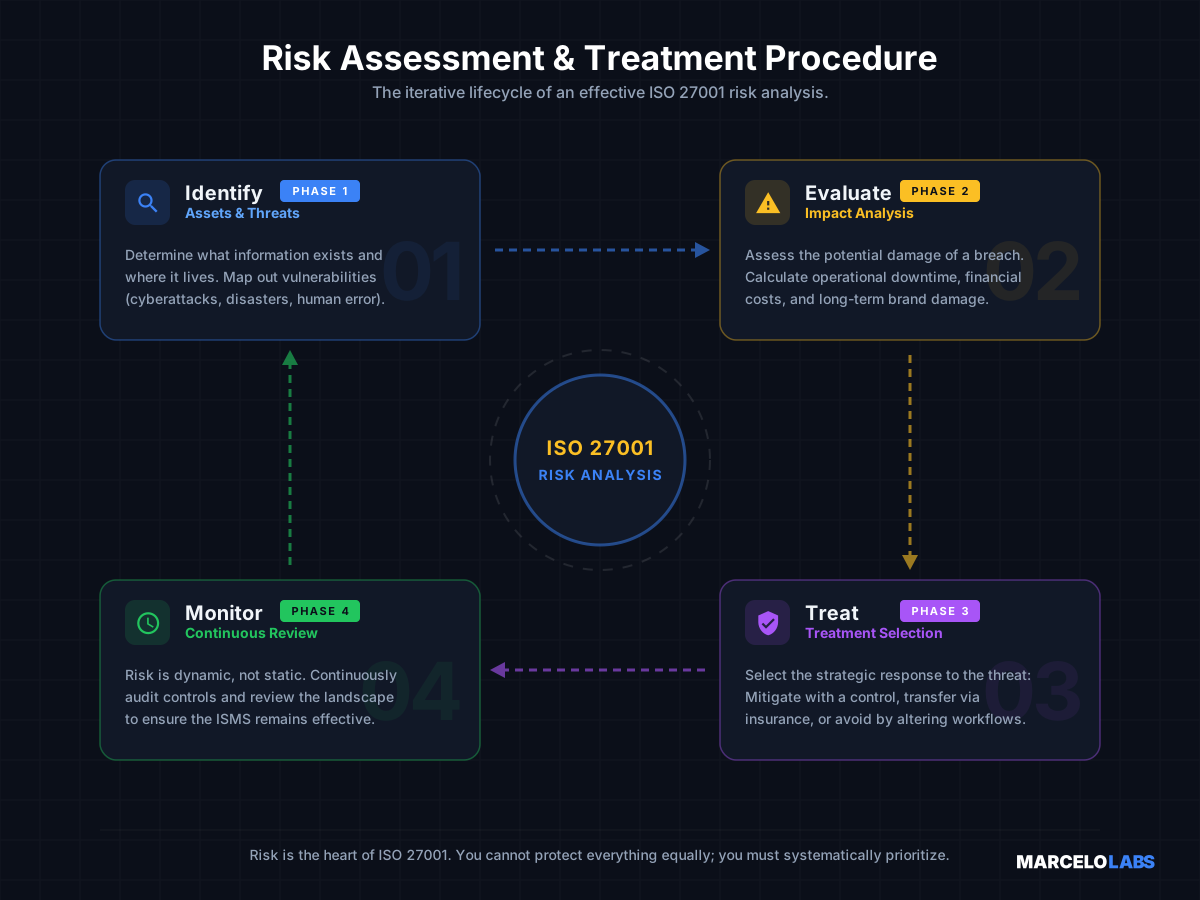
Risk is the heart of ISO 27001. You cannot protect everything equally; you must prioritize. Your procedure for iso 27001 risk analysis should follow a structured path:
- Identify Assets: What information do we have, and where is it?
- Identify Threats: What could go wrong (cyberattacks, natural disasters, human error)?
- Evaluate Impact: If a breach happened, how much would it cost or damage the brand?
- Treatment Selection: Do we mitigate the risk with a control, transfer it with insurance, or avoid it by changing the process?
Business Continuity and Disaster Recovery Procedures
Finally, your procedures must answer the question: "What if the worst happens?" In a cloud-centric world, this is where iso 27001 business continuity becomes essential. It is the bridge between a security incident and organizational survival.
| Element | Focus | ISO 27001 Requirement |
|---|---|---|
| BCP (Business Continuity) | Keeping the business running during a crisis. | Focus on essential functions and personnel. |
| DRP (Disaster Recovery) | Restoring technical systems and data. | Focus on RTO (Time) and RPO (Data Loss). |
| ISO 27001 Cloud | Managing third-party availability. | Shared responsibility with cloud providers. |
When operating in an iso 27001 cloud environment, your continuity procedures must be tested. It isn't enough to trust your cloud provider; you must have verified evidence that your backups are viable and that your failover mechanisms work as intended under pressure.
Developing an Information Security Management System (ISMS) ISO 27001
Having established the essential procedures that govern specific security actions, we must now address the broader container that holds these elements together: the isms iso 27001. Developing a management system is not merely a documentation exercise; it is an architectural project that aims to align security objectives with business goals. Think of the ISMS as the "central nervous system" of your organization’s data protection strategy. It is designed to ensure that security is not a series of isolated firewalls or password policies, but a cohesive, living entity that grows alongside the company.
The development of an ISMS requires a shift in corporate culture. It moves the conversation from "what tools should we buy?" to "how do we manage risk across our entire operation?" This systemic approach ensures that every stakeholder, from the intern to the CEO, understands their role in the security chain. By formalizing this system, you transform security from an erratic, reactive cost center into a predictable, proactive business enabler.
Key Components of an ISMS
The skeletal structure of any successful iso 27001 implementation rests on five non-negotiable pillars. These components work in a feedback loop, ensuring that the system is self-correcting and resilient.
- Organizational Context & Scope: Before a single policy is written, the organization must decide exactly which assets, locations, and departments are covered. A scope that is too narrow leaves the organization vulnerable, while one that is too broad can lead to implementation paralysis.
- Leadership and Commitment: Without "buy-in" from the top, an ISMS will inevitably wither. Leadership provides the resources, the budget, and the authority to enforce the standard’s requirements across the company.
- Risk Management Framework: This is the brain of the ISMS. It involves identifying threats to information assets, evaluating their impact, and deciding on the appropriate treatment (mitigate, transfer, avoid, or accept).
- Resource Allocation and Competence: Ensuring that the team responsible for security has the tools, training, and time necessary to maintain the system effectively.
- The PDCA Engine (Plan-Do-Check-Act): This cycle ensures that security isn't just "done" once; it is planned according to risk, executed via procedures, checked through monitoring and audits, and improved through corrective actions.
ISO 27001 Information Security Policy
Within this framework, the iso 27001 information security policy stands as the definitive high-level document that sets the tone for the entire organization. It is, essentially, the "Constitution" of your security posture. This policy does not list every technical firewall rule; instead, it outlines the organization’s overall objectives and its framework for setting security goals.
When building your suite of iso 27001 policies, it is common for teams to feel overwhelmed by the blank page. This is where an information security policy template iso 27001 can be an invaluable asset. However, a template is just a skeleton. To be effective, the policy must include:
- Scope and Applicability: Who and what does this policy cover?
- Objectives: What are we trying to achieve (e.g., zero data breaches, 99.9% availability)?
- Compliance Mandates: A statement of commitment to meeting legal, regulatory, and contractual requirements.
- Ownership: Clearly defined roles for who is responsible for the policy's upkeep and enforcement.
- Consequences: A clear statement regarding the disciplinary actions for non-compliance.
The most successful implementations are those that take the template as a starting point and customize it to the company's unique voice. A policy that feels "foreign" to the employees will rarely be followed; it must resonate with the actual culture of the workplace.
Role of Policies and Procedures in an ISMS
To understand how the ISMS functions on a daily basis, we must distinguish between the "what" and the "how." The relationship is one of hierarchy and execution:
| Document Type | Purpose | Audience | Level of Detail |
|---|---|---|---|
| Policies | Define "What" the rules are and the organization's goals. | All Employees / Stakeholders | High-level, strategic. |
| Procedures | Provide the "How"—the step-by-step instructions. | Specific Technical or Admin Staff | Deeply detailed, operational. |
In a mature ISMS, the relationship is seamless. If a policy dictates that "all administrative access must be logged," the corresponding procedure specifies which tool to use and who performs the weekly review. This clarity ensures that there is no ambiguity when an auditor asks how you handle a specific risk.
ISO 27001 Compliance and Certification
Moving from the development phase into the pursuit of formal iso 27001 compliance is a significant transition. This is the stage where your internal efforts are validated by an external, objective third party. Certification is the ultimate proof of a "well-oiled" security machine. It tells your clients, investors, and regulators that you don't just talk about security—you have a verifiable system in place to prove it.
Conducting an Initial Readiness and Gap Analysis
Before you invite an external auditor into your environment, you must have a clear picture of your current state. This is where the iso 27001 gap analysis serves as your most critical diagnostic tool. It identifies exactly where you are meeting the requirements and where you are falling short.
For many organizations, the internal team may be too close to the process to see the flaws. This is why engaging with iso 27001 readiness assessment providers has become a best practice. These external experts provide an unbiased "pre-audit" that mimics the scrutiny of the actual certification body. They help you uncover "shadow IT" issues, undocumented processes, or lapses in physical security that could cause a failure during the real audit.
Understanding ISO 27001 Certification Audit
The formal iso 27001 certification audit is a two-stage process that can feel intimidating if you aren't prepared. It is designed to verify both the design and the operation of your ISMS.
| Stage | Focus | Main Objective |
|---|---|---|
| Stage 1 Audit | Documentation Review | To verify if your ISMS "blueprint" (policies, SoA, manual) meets the standard's requirements. |
| Stage 2 Audit | Evidence & Effectiveness | To observe your team in action and verify that you are actually following your documented procedures. |
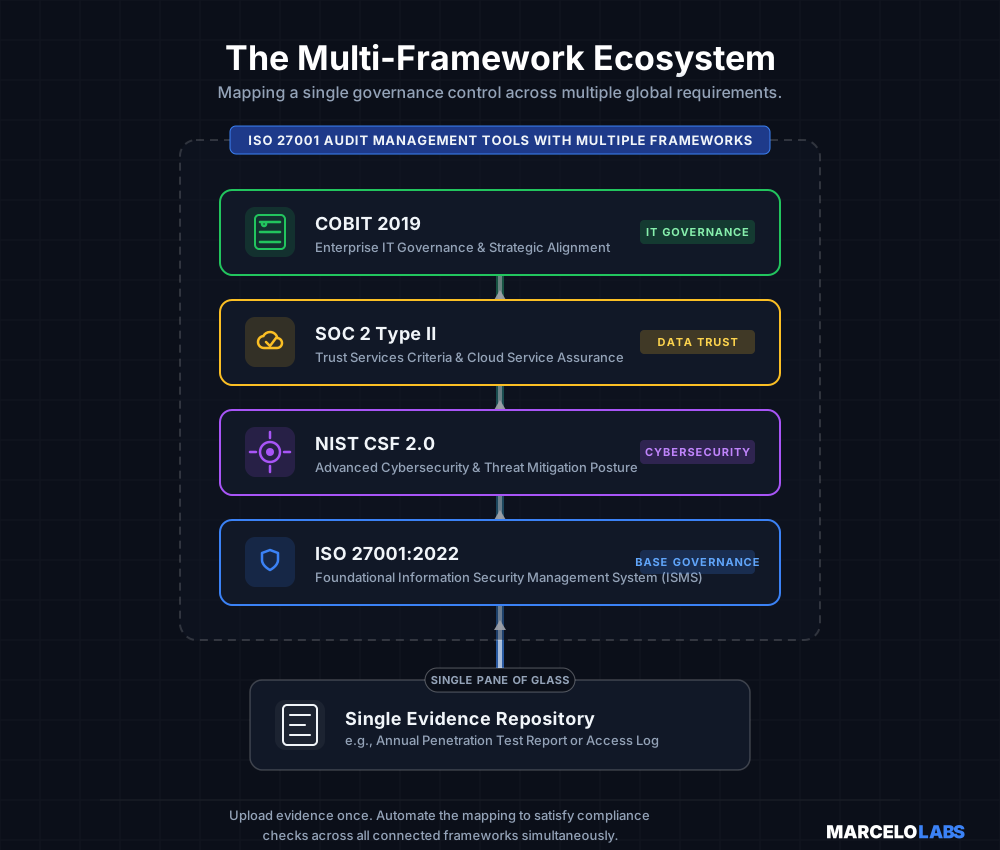
In the modern enterprise, managing this volume of evidence is no longer a task for spreadsheets. Organizations are increasingly turning to iso 27001 audit management tools with multiple frameworks. These platforms allow you to map one control (like a penetration test) to multiple requirements, such as NIST CSF or SOC 2. This not only speeds up the audit process but also provides a "single pane of glass" view of your global compliance health.
Steps to Achieve ISO 27001 Certification
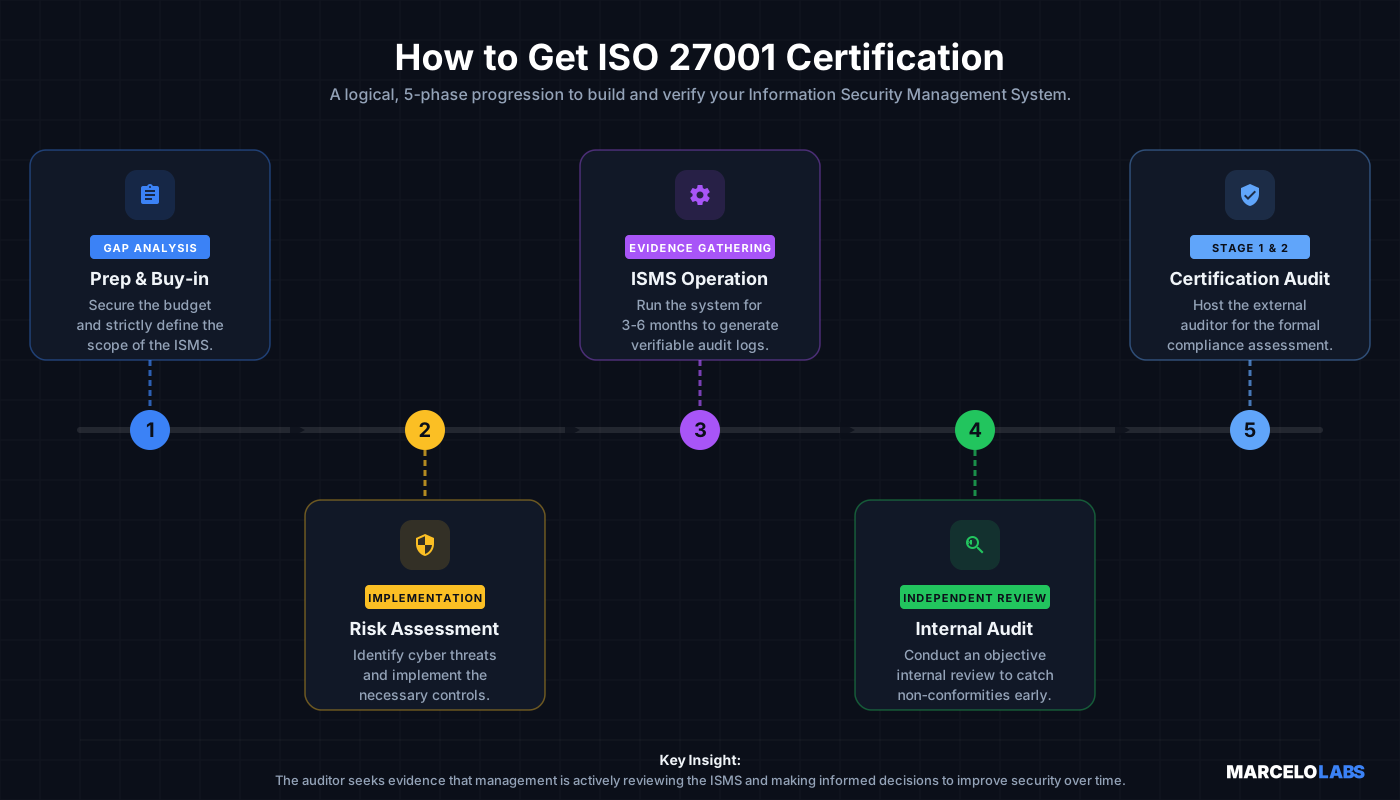
If you are mapping out how to get iso 27001 certification, view it as a logical progression:
- Preparation & Buy-in: Secure the budget and define the scope of the project.
- Risk Assessment & Treatment: Identify your threats and implement the necessary controls.
- ISMS Operation: Run the system for 3-6 months to generate "audit evidence" (logs, meeting minutes, training records).
- Internal Audit: Conduct an independent review of your own system to catch non-conformities early.
- Certification Audit: Host the external auditor for Stage 1 and Stage 2 assessments.
Throughout these steps, the focus must remain on the "C" in ISMS: Management. The auditor isn't just looking for technical perfection; they are looking for evidence that management is reviewing the system and making informed decisions to improve the organization's security posture over time.
Common Challenges in Achieving ISO 27001 Compliance
Even with a perfect plan, challenges are inevitable. However, modern technology has provided solutions to the most persistent hurdles:
- Documentation Fatigue: The volume of required records can overwhelm small teams. This has led to a surge in iso 27001 compliance platforms for saas companies, which automate the collection of evidence directly from your cloud infrastructure (AWS, GCP, Azure).
- Siloed Information: Security often stays within IT. A successful ISMS breaks these silos, involving HR, Legal, and Operations in the security conversation.
- Static Compliance: Many companies treat the audit as a once-a-year event. The adoption of iso 27001 certification software transforms this into a "continuous compliance" model. These systems provide real-time alerts if a security control fails—such as an unencrypted database or a missed employee background check—allowing for immediate remediation.
By solving the "evidence collection" problem through automation, organizations can focus their energy on the most important part of the standard: actual risk management and the protection of their customers' data.
In the following sections, we will explore the technical cybersecurity considerations that must be integrated into this framework and how the standard continues to evolve to meet the threats of the next decade.
Cybersecurity Considerations in ISO 27001
While the Information Security Management System (ISMS) provides the structural bones of your security strategy, it is the technical layer of cybersecurity iso 27001 that provides the muscle. Many organizations make the mistake of treating ISO 27001 as a purely administrative or "paperwork" exercise. However, in an era where cyber threats are automated and relentless, your procedures must translate into concrete technical defenses.
Cybersecurity within the ISO framework is about more than just installing a firewall; it is about ensuring that your technical controls are directly mapped to the risks identified during your assessment. It is the tactical execution of the strategic goals set by management.
Importance of Cybersecurity in ISO 27001
The importance of cybersecurity in this standard cannot be overstated because it protects the "Availability" and "Integrity" portions of the CIA triad in real-time. Without a strong technical foundation, even the most well-written policy is merely a suggestion.
To help visualize how cybersecurity interacts with the broader ISMS, consider the following distinction between Information Security (the standard's goal) and Cybersecurity (the technical means):
| Feature | Information Security (ISMS) | Cybersecurity (Tactical) |
|---|---|---|
| Focus | All information assets (paper, digital, IP). | Digital assets, networks, and cloud. |
| Approach | Risk management and policy-driven. | Technical controls and threat hunting. |
| Goal | Organizational resilience and compliance. | Prevention of unauthorized digital access. |
| ISO Role | Clauses 4–10 (Management System). | Annex A Controls (Technical Measures). |
By integrating cybersecurity deeply into your ISO 27001 framework, you ensure that your IT team is not working in a vacuum. Instead, their technical efforts are validated by the standard, and their budget requests are backed by the risk assessment findings.
Evolution of the Standard: From ISO 27001 2017 to Modern Requirements
A common point of confusion for many organizations is the specific version of the standard they should follow. For several years, many European businesses and global partners focused on the iso 27001 2017 version, which was essentially the 2013 standard with minor regional amendments. However, as digital environments have shifted toward the cloud and remote work, the standard has had to evolve significantly.
Staying current with iso 27001 news updates is vital for maintaining a certifiable status. The transition from the older versions to the modern ISO/IEC 27001:2022 update reflects a massive shift in the cybersecurity landscape.
- Attribute Categories: The newer version introduces "attributes" (Organizational, People, Physical, and Technological), making it easier to filter and manage controls.
- New Controls for Modern Threats: Several new controls were added to address the gaps seen in previous years, including:
- Threat Intelligence.
- Information Security for Use of Cloud Services.
- ICT Readiness for Business Continuity.
- Physical Security Monitoring.
- Configuration Management (to prevent cloud leaks).
- Data Masking and Web Filtering.
If your organization is still referencing old documentation or outdated templates, you may find yourself vulnerable to threats that the 2022 version specifically addresses. Modernizing your approach isn't just about compliance; it's about ensuring your defenses match the sophistication of today's attackers.
Best Practices for Cybersecurity ISO 27001
To achieve a gold-standard implementation, you should go beyond the minimum requirements of the Annex A controls. The following best practices represent a "defense-in-depth" approach tailored for the ISO framework:
- Implement Zero Trust Architecture: Move away from the idea of a "trusted internal network." Verify every user and device, regardless of their location, aligning with ISO’s strict access control requirements.
- Automate Vulnerability Management: Don't wait for your annual internal audit. Use automated scanners to identify and remediate weaknesses in real-time, feeding this data back into your risk treatment plan.
- Enhance Employee Awareness: Since human error remains a leading cause of breaches, your "People" controls should include simulated phishing attacks and continuous security training.
- Secure the Supply Chain: ISO 27001 emphasizes third-party security. Ensure that your vendors are held to the same high standards you have set for yourself, using clear Service Level Agreements (SLAs).
- Robust Incident Response: Your incident management procedure should be tested through "Tabletop Exercises." It isn't enough to have a plan on a shelf; your team must practice how they would respond to a live ransomware event.
Summary and Next Steps
We have covered a vast amount of ground in this guide, from the initial understanding of the framework to the complex dance of certification and the technicalities of modern cybersecurity. The journey to ISO 27001 is a marathon, not a sprint, but the rewards—in terms of trust, efficiency, and security—are unparalleled.
ISO 27001 Summary of Key Procedures
To conclude, let’s revisit the core elements we have discussed. This iso 27001 summary serves as a quick-reference checklist for your implementation journey:
- Risk Assessment: The foundation of everything. You cannot protect what you haven't evaluated.
- Statement of Applicability (SoA): Your customized list of controls that tells the auditor (and the world) what you are doing to stay safe.
- Documented Procedures: The step-by-step "how-to" guides for incident response, access control, and business continuity.
- The ISMS Engine: The management framework (Clauses 4-10) that ensures security is a continuous process, not a project.
- Internal & External Audits: The verification steps that ensure your "blueprint" matches your "building."
Resources for ISO 27001 Implementation Guide
Getting started is often the hardest part. If you are looking for a comprehensive iso 27001 filetype pdf guide to share with your executive team, or if you require a specialized iso 27001 service to perform a gap analysis and lead your implementation project, now is the time to act.
Many organizations find that the cost of an expert consultant or a compliance platform is dwarfed by the speed and accuracy they bring to the process. Whether you choose to build your system in-house using templates or partner with an expert, the key is to begin with a clear understanding of your organizational scope and objectives.
Importance of Continuous Improvement
The final word on ISO 27001 must be about the "Act" phase of the PDCA cycle. Information security is never "finished." As new technologies emerge—such as Artificial Intelligence and Quantum Computing—new threats will follow.
The true power of the ISO 27001 standard is its ability to adapt. By fostering a culture of continuous improvement, your organization ensures that its security posture is always evolving. You don't just stay secure for the audit; you stay secure for the future. Regular management reviews, updated risk assessments, and a keen eye on iso 27001 news updates will ensure that your organization remains a resilient fortress in an ever-changing digital world.
Ready to start your journey? The path to compliance begins with a single step: understanding your risks. Once you master the procedures, the certification will follow naturally.